
Showing posts with label Pink Floyd. Show all posts
Showing posts with label Pink Floyd. Show all posts
2015/02/05
Roger Waters - Documentary Behind The Wall Berlin 1990
Subtitles in Español, Francais, Deutsch and Portugues.
From the DVD Roger Waters The Wall Live In Berlin 1990


2014/10/07
Roger Waters Reminds Curious Fans: 'I Am Not Part of Pink Floyd'

BY KORY GROW | October 2, 2014
"I have nothing to do with [new album] 'Endless River,' singer writes. "Phew! This is not rocket science, people. Get a grip"
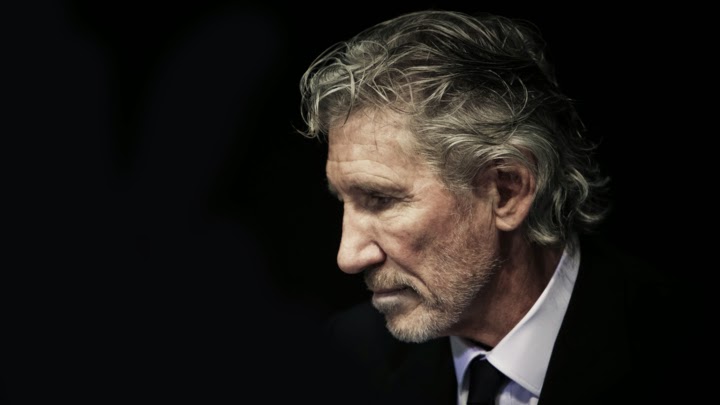
Founding Pink Floyd bassist Roger Waters left the group bitterly in 1985 and famously sued his ex-bandmates at the time for wishing to carry on with the group's name, but some of his fans appear to have forgotten this. The singer-songwriter has issued a note on Facebook to remind his fans that, while Pink Floyd are indeed issuing their first record in 20 years – the instrumental record The Endless River – he had no role in making it.
"Some people have been asking Laurie, my wife, about a new album I have coming out in November," Waters wrote. "Errhh? I don't have an album coming out, they are probably confused. David Gilmour and Nick Mason have an album coming out. It's called Endless River. David and Nick constitute the group Pink Floyd. I on the other hand, am not part of Pink Floyd. I left Pink Floyd in 1985, that's 29 years ago. I had nothing to do with either of the Pink Floyd studio albums, Momentary Lapse of Reason and The Division Bell, nor the Pink Floyd tours of 1987 and 1994, and I have nothing to do with Endless River. Phew! This is not rocket science people, get a grip."
Waters lost his lawsuit over the band name in 1987, and that same year the band issued A Momentary Lapse of Reason. In recent years, Waters has revisited his Pink Floyd past. On July 2nd, 2005, Waters, Mason, Gilmour and keyboardist Rick Wright performed together as Pink Floyd for the first time in nearly a quarter century at the Live 8 concert at London's Hyde park. Waters has mounted solo tours in recent years, performing the Floyd albums Dark Side of the Moon and The Wall in their entirety, and reunited again with Gilmour and Mason in London at a tour stop for the latter in 2011.
"It was really nice to be part of it and to show support for Roger, not that he really needs it," Mason told Rolling Stone after their 2011 reunion. "I suppose it's nice to have Roger wanting to register David and myself as part of it, in a way. It was a mutual thing: it was nice to be recognized but also very nice to lend support to Roger and make it clear that we're not punching it out in these auditoriums. We're not critical of him doing it."
In 2013, Waters told the BBC he regretted his lawsuit over the band name. "I was wrong," he said. "Of course I was. Who cares?"
In the same Facebook note, Waters also criticized the role of some countries in the Israel-Palestine conflict. "On another subject, my recent trip to Bruxelles was very moving," he wrote. "To listen to the testimony of some of those present in Gaza during the euphemistically named Operation Protective Edge, July and August 2014 was deeply disturbing. I am still non plussed by the acquiescence of the governments of the USA, UK and EU to the policies of the current Israeli administration. Should we encourage our leaders to sue for a peaceful solution or not?"
The Endless River – which does not feature Waters – will come out on November 10th. The band decided to put out the record after discovering recordings they had made with Wright, who died in 2008, during the sessions for The Division Bell. "We listened to over 20 hours of the three of us playing together and selected the music we wanted to work on for the new album," Gilmour said in a statement. "Over the last year we've added new parts, re-recorded others and generally harnessed studio technology to make a 21st century Pink Floyd album. With Rick gone, and with him the chance of ever doing it again, it feels right that these revisited and reworked tracks should be made available as part of our repertoire."
From www.rollingstone.com
2014/09/13
Roger Waters Says ‘The Wall’ is ‘Unashamedly Anti-War’

Senior Film and Media Reporter
SEPTEMBER 6, 2014

At the Toronto Film Festival premiere of “Roger Waters’ The Wall,” the former Pink Floyd singer and guitarist said he was inspired to make a film of his wildly successful concert tour of the famous album out of political necessity.
“Any armed conflict is an underscore and an exclamation mark to this movie, because this movie is unashamedly anti-war, ecumenical, and about love for all men and women whatever their race, color, creed, nationality or whatever,” said Waters.
It’s also the second time that a film has been made of “The Wall,” but unlike the 1982 Alan Parker film, this isn’t a narrative picture and it’s not autobiographical. That film dealt with an emotionally isolated singer, but the 2014 version widens its canvas, while retaining a soundtrack that includes such rock classics as “Comfortably Numb” and “Hey You.”
“When Roger decided that he wanted to bring it back on the road he said, ‘I’m not that guy. I’m happy. I’m not this angry kid anymore,'” said co-director Sean Evans. “We took the meat of it and made it more about the world and building walls in society, religion and politics.”
Waters has been outspoken of late, criticizing the United States, for instance, for supporting Israel in its standoff with Hamas. At the premiere, he did not speak about any specific war or hot zone, but implied he felt that people needed to become more politically active in order to prevent future bloodshed.
“It’s about our children and about each other and about how we so desperately need to transcend national boundaries in order to cooperate with one another rather than sitting entrenched on our side of a boundary or wall and lobbing bombs at each other over the top of it,” he said.
“We’re on a slippery slope and we need to dig our heels in and say enough, enough, this is not right,” Waters added.
The premiere happened to coincide with the rocker’s 71st birthday, an anniversary that the filmmakers insisted was coincidental.
From variety.com
Toronto fans sing 'Happy Birthday' to Roger Waters

By JOHN CARUCCI, Associated Press | September 6, 2014
.jpg) |
| Photo By Frank Gunn/AP Roger Waters, right, signs autographs as he arrives for the premiere of "Roger Waters: The Wall" at the Toronto International Film Festival in Toronto on Saturday, Sept. 6, 2014. |
 |
| Photo By Frank Gunn/AP Roger Waters waves as he arrives for the premiere of "Roger Waters: The Wall" at the Toronto International Film Festival in Toronto on Saturday, Sept. 6, 2014 |
TORONTO (AP) — Roger Waters celebrated his 71st birthday in style with a world premiere of his new documentary at the Toronto International Film Festival.
When the former Pink Floyd front man walked out on stage to introduce the film, a fan in the packed Elgin Theater screamed out happy birthday. That began an impromptu chorus of "Happy Birthday," and Waters graciously acknowledged his age with an expletive.
"Roger Waters: The Wall" chronicles his recent tour covering the seminal 1979 Pink Floyd album — as well as his inspiration for writing it.
Waters told the audience he began working with co-director Sean Evans five years ago to update the show with a more ecumenical and anti-war approach. Since it kicked off four years ago in Toronto, the tour has grossed nearly $500 million.
Waters came back out for the post-film Q&A to a standing ovation. Moderated by TIFF CEO Piers Handling, the question of Waters' strong political feelings and the criticism he received for it came up early.
Waters politely responded by saying that his strong, humane traits came from his parents, but he wasn't there to defend himself or fight with anybody.
The musician has spoken out about Israeli treatment of Palestinians and has refused to play any shows in Israel.
The film does not have a release date.
From www.chron.com
Pink Floyd's Roger Waters: 'I've made an anti-war movie'

By Rebecca Hawkes and Reuters 08 Sep 2014
The Pink Floyd co-founder say it's time to protest against politicians
 |
| Roger Waters performs in Portugal in 2011 Photo: EPA |
Pink Floyd co-founder Roger Waters' new film, Roger Waters: The Wall, documents the singer-songwriter's three year The Wall Live tour, which ran from 2010 to 2013, and saw Waters perform Pink Floyd's famous 1980 double album in its entirety.
But Waters says that the film should be seen as a protest against the growing spread of armed conflict, rather than just a concert documentary.
The film, which had its world premiere on Saturday at the Toronto International Film Festival, documents the band's impressive concerts, that included pyrotechnics, animation, a flying inflatable pig and an actual wall constructed on stage as the show progressed.
But it also includes vignettes of Waters visiting war cemeteries and memorials in Europe, including the grave of a grandfather who died in World War One, and the site of the 1944 battle that killed Water's father when the singer was just a baby.
The concert itself featured projections on its set of veterans, activists and average people who died in wars, protests and attacks on civilians.
Waters said a major theme of the original album is the need to challenge politicians who seem increasingly willing to resort to the use of violence.
"It's a question that's not being asked of our leaders often enough. If this film asks that question, at least in part, then it would be good," Waters told Reuters on the red carpet ahead of the premiere.
"It's a protest movie. It's an anti-war, protest movie."
The film received a standing ovation after a screening packed with fans. The audience also sang an impromptu "Happy Birthday" when Waters, who turned 71 on Saturday, took to the stage.
The Wall Live became one of the top grossing concert tours of all time as it grew to more than 200 shows in Europe, North and South America and Australia.
Waters said he had welcomed the opportunity to spread the album's core message that politicians and citizens must work to overcome the divisions fueling the wars we see today.
"It's very easy for people to say... that will never happen, because they are this, and they are that. And you can't talk to them," he told Reuters.
"They just lived in a different part of the globe and are educated differently. And they need education the same way that we do so that we can cross the great divide that we might call the wall."
From www.telegraph.co.uk
Roger Waters' 'The Wall' Tour Documentary Premieres in Toronto

BY DANIEL KREPS | September 7, 2014
 |
| Sonia Moskowitz, Getty Images |
Roger Waters celebrated his 71st birthday September 6th at the Toronto International Film Festival by attending the world premiere of his new documentary Roger Waters: The Wall. TIFF was the perfect venue for the former Pink Floyd bassist to debut his film since The Wall Live tour actually began its run at Toronto's Air Canada Centre on September 15, 2010, so Roger Waters: The Wall's TIFF premiere was like coming full circle. Also, what better way to follow "Bill Murray Day" than with a film that explores Waters' epic tour from behind "the Wall."
Longtime Radiohead producer Nigel Godrich is credited with "Sound" in Roger Waters: The Wall, along with veteran sound mixer Adam Scrivener. The documentary runs for 133 minutes – 12 minutes longer than the classic double-LP itself – and was co-directed by Waters and Sean Evans, who was The Wall Tour's creative director. Roger Waters: The Wall was filmed in three cities on two continents. So far, no release date has been announced for the documentary, but there will be two more Toronto screenings. Waters also revealed that his tour documentary could double as "an anti-war, protest film."
Following the premiere, and after an impromptu serenade of "Happy Birthday" by the crowd, Waters conducted a Q&A session with audience members and was asked why Pink Floyd's The Wall is so enduring. "I think people are sick and tired of being told that the most important thing in their life is commerce and the new this and the new that," Waters said according to the Toronto Sun. "I think people are probably ready to go now, 'Well, all of that rhetoric lead us to lob bombs over the top of the wall, that divides society ecologically, economically, philosophically and politically, from all our fellow human beings. And we no longer want to be told by our political leaders that they are scum and that we are great.' So that I believe that it may be we're no longer interested in the 'us and them' form of political philosophy that we've been fed on for the last couple of 1,000 years and that we may be ready to move into a new place." All that, plus "Comfortably Numb" is awesome.
"I can't top that tour," Waters told Rolling Stone last November. "First of all, you have to accept the fact that I'm not going to live forever... You just have to accept that when you do something as enormous as that tour. The hardest thing in the world is thinking of something to do, so going and doing it is a reward in itself."
www.rollingstone.com
Roger Waters Discusses Emotional Anti-War Documentary ‘The Wall’ at TIFF

By Karen Bliss
September 07, 2014

"It has a more universal message, which is passionately anti-war," Roger Waters says.
If a concert film can be emotional and even require a tissue, Roger Waters The Wall is it.
Roger Waters Premieres His New Doc at Toronto International Film Festival
Roger Waters, the Pink Floyd co-founder marked his 71st birthday at the Toronto International Film Festival Saturday (Sept. 6) night for the world premiere of this unique live concert documentary. The film takes his strong anti-war stance and interweaves a highly personal mission into concert footage from his 2010-2013 sold out The Wall Live tour, which actually started in Toronto.
The 133-minute documentary, which includes all 26 songs from Pink Floyd’s 1979 album, The Wall, is still seeking a distributor.
“The only difference in the movie is that I’ve made a road movie about visiting the graves of both my grandfather and my father -- well, my father doesn’t have a grave because his remains were never found. He died in 1944 at Anzio [Italy] in the Second World War, but there is a memorial to him which during the movie I visit,” Waters told Billboard before the screening.
“I basically visit all kinds of serious iconic places with friends of mine from the past, in this movie. I hope that that road movie is integrated within the context of the concert movie we’ve made and serves to accentuate some of the points that we made in the concert.”
Waters worked closely with co-director and co-writer Sean Evans, the creative director on The Wall Live and previous visuals designer for Waters’ 2006-2008 The Dark Side of the Moon Live tour and his opera Ça Ira.
“It has to do with his impetus for writing The Wall,” Evans says of the narrative component to the film. “It’s all one big circle and it’s great how it all ties back.”
In The Wall Live -- based on the songs from Pink Floyd’s classic double album, The Wall, and subsequent tour -- Waters hammered home the idea that war is commerce and the immense cost in human lives. The stage show includes military costumes, animation of fighter planes and bombs, and dozens of fan-submitted photos of people all over the world whose lives were lost to war in this last century.
The original album and Alan Parker’s legendary 1982 film were based on the destructive life of an isolated rock star whose father was killed in action during World War II.
“I wrote this piece nearly 40 years ago. It came to me a few years ago that it had a broader message than the original message of the whiny guy who spat at the kid in Montreal in 1977,” Waters says, referencing his notorious reaction to a disruptive fan during Pink Floyd’s In The Flesh/Animals tour.
“And it has a more universal message, which is passionately anti-war, believing that war is a business -- Smedley Butler’s whole ‘War Is A Racket.’ It’s all about people making money. It actually doesn’t help the people who are expected to be collateral damage -- and most casualties in modern warfare are civilians.”
Like the concert, the documentary includes all The Wall songs in chronological order, but Waters’ road trip makes the message more powerful. He is not just looking at war from the outside; he knows firsthand the lifelong pain such loss has on the families of those left behind.
As the end credits roll, he respectfully shows all the photos of fallen loved ones.
After the screening, Waters did a 25-minute Q&A session, telling the audience at the Elgin Theatre he hoped this new film version of The Wall is “more universal and ecumenical and anti-war and humanitarian than the original version that I did with my much loved old colleagues from Pink Floyd, Dave and Rick and Nick.”
He added another hope -- that we’d “find a different way of organizing our politics and our commerce that don’t require that we murder each other.”
“Because we are all brothers and sisters under the skin and above it,” he says. “I know it sounds ridiculous to say, but it’s super important that we stop lopping bombs over the top of the wall and start trying to dismantle it so that we can say ‘Hi’ to whoever is on the other side, whether the divide is religious or nationalistic or political or economical.”
From www.billboard.com
2014/07/07
The phenomenal Roger Waters of Pink Floyd

By: Magdalene Paniotte, Jul 2, 2014
Roger Waters is a supremely creative musician, humanitarian and co-founding member of the legendary Pink Floyd. Since the band's inception in the 1960s, Roger has immersed himself with other group members to develop what is known as conceptual album artwork, whereby in contrast to unrelated flowing compositions songs are conceived thematically to impart deeper meaning, while conveying a visual sense of the music. The group's original style of progressive and psychedelic rock combines elements of cinematic art, opera and blues to form a purely unique sound. Several years beyond their first album release of The Piper at the Gates of Dawn, the all-time record breaking sales volume from Dark Side of the Moon established Pink Floyd’s historic presence, followed by Wish You Were Here and The Wall.
With the passage of time Waters has charted new territory, expanding on Pink Floyd’s tradition of spectacular theatrics and visual effects in a recent world tour of the immensely popular re-mastered album The Wall, which was also made into a motion picture in previous years. A strong believer in world peace who feels that to remain silent is never a choice, this latest edition is a collaborative effort to visually reinterpret the fantastic work, only this time with political overtones as opposed to narrative structure. A prevalent theme on the album is to overcome oppression by breaking down barriers that a wall might represent as an obstruction separating human beings from each other.
On a more artistic level, perhaps Roger’s conceptual idea of the wall is to create a psychological distance between performer and audience so as to ultimately empower people to see the big picture, to reconsider the music in the greater scheme of things. Also defined as "the fourth wall" in theatrical terms, the notion of an invisible wall forms a representational illusion permitting a performer to maintain an intellectual distance as opposed to directly engaging with audiences presentationally. A bit similar to viewing a motion picture, the intended outcome of this artistic detachment is to enable concert fans to get the deeper message in contrast to simply experiencing the thrill of being in the company of a rock superstar.
Still going strong at age 70, Waters is a politically sensitive artist who feels that people everywhere have the right to live in dignity and free of fear. An advocate of human rights who wholeheartedly believes in freedom of expression, he empathizes with families of veterans who have lost their loved ones in times of war. In fact, Roger occasionally relates to American Veterans at half-time during shows, and has actually been working with amputees at Walter Reed to musically uplift their spirits... a great musician and family man who’s been quoted as saying that he has nothing to hide but the truth, Waters has recently started writing a personal memoir.
From axs.com
2014/06/18
Hear Roger Waters’ Early, Work-in-Progress Recordings of Pink Floyd’s The Wall

June 17th, 2014
by Josh Jones
My first exposure to Pink Floyd’s rock opera The Wall left me feeling nothing less than astonishment. And though I never had the chance to see the outrageous stage show, with its very literal wall and giant inflatable pig, the film has always struck me as a suitably dark piece of psychodrama. Over a great many subsequent listens, the melodramatic double-album can still blow my mind, but I’ve come to feel that some of the strongest material are those songs penned jointly by Roger Waters and David Gilmour, and those are relatively few. (Mark Blake quotes Gilmour as saying “things like ‘Comfortably Numb’ were the last embers of mine and Roger’s ability to work collaboratively together.) The bulk of the album belongs to Waters, its autobiographical details and personal themes, and the album and film can sometimes feel as stifled and claustrophobic as its protagonist does. This is either a creative failing or a brilliant melding of form and content.
Inspired by an incident in which an exasperated Waters spat on a rowdy fan at a stadium show in Montreal during the band’s 1977 “In the Flesh Tour,” The Wall documents the painful rise and even more painful fall of a fictive rock star named, of course, Pink (played by Bob Geldof in the film version), whose life closely parallels Waters’, down to the spitting. It has always seemed an odd irony that Waters responded to the alienation of touring massive stadiums by creating a stadium show bigger than anything the band had yet done, but it speaks to the bassist and singer’s grandiose personality and obsessive desire to turn his angst into theater. Oftentimes the results were spectacular, other times bombastic and confusing (at least to critics, some of whom are easily confused). The recording of the album, as many well know, strained the band almost to breaking, and by many accounts, Waters’ imperiousness didn’t help matters, to say the least.
All of the behind-the-scenes drama may or may not eclipse the drama of the album itself, depending on your level of fandom and interest in Pink Floyd biography. Lovers of Waters’ epic rock dramaturgy will find edification at the extensive online critical commentary Pink Floyd The Wall: A Complete Analysis, an online work in progress that delivers on its title. For a very brief account of the story behind the story, co-producer Bob Ezrin’s interview with Grammy.com offers perspective from someone involved in the project who wasn’t a member of what came to seem like The Roger Waters’ Band. Ezrin describes The Wall as “Roger’s own project and not a group effort,” and his own role as “a kind of referee between him and the rest of the band.”
In the beginning we had a very long demo that Roger had written. We started to separate out the pieces, and when we looked at the storyline we realized what we needed was a through line, something to get us from start to finish.
Ezrin recounts that he “closed [his] eyes and wrote out the movie that would become The Wall,” handed the script out to the band, and marked songs missing from Waters’ demo as “’TBW’—‘to be written.’” (Among those songs was “Comfortably Numb.”)
The recordings at the top of the post—which surfaced in 2001 with the title Under Construction—represent a step in The Wall’s evolutionary development between Waters’ rudimentary demos (short excerpts above) and the completed album. (See the Youtube page for a complete tracklist. Contrary to the uploader’s description, Roger Waters certainly does not play all the instruments.) While Under Construction has generally been referred to as a “demo,” Rick Karhu of Pink Floyd fanzine Spare Bricks expresses his doubts about the use of a term he takes to denote “a fairly polished recording”: “Demos are not rough recordings or works-in-progress […]. I doubt very much that Under Construction is a demo of The Wall.”
It’s too rough around the edges—at times shockingly so—to be strictly considered a demo recording. At points, things are haphazardly edited together. Songs cut off abruptly, fade unexpectedly or drop out entirely for a moment as if someone at the mixing desk hit the wrong button at some point. Vocal tracks peak-out, often causing anguish to the listener’s ear drums. Some instrument lines (mostly the bass guitar) meander through the background as if the person playing is making up the part as they go. Equalization is nonexistent on most tracks. Overall, most of it sounds like a 4-track recording by a band who has only the vaguest notion of how the equipment works.
Lest we take this description as disparagement, Karhu clarifies: “It is precisely for those reasons […] that I love them dearly and consider them one of the most valuable, unauthorized Floyd recordings to be unearthed. Ever.” Many Youtube commenters agree, some even arguing that these rough sketches are superior to the final polished product. It’s a debate I won’t weigh in on, though I will say that like Karhu, I enjoy the lo-fi raggedness of this version of The Wall. It seems to convey the emotionally frayed edges of these songs in a way the slick production of the studio album may not at times. Either as a mere document of the album’s early history or an alternate, fragmented—and hence more traumatized—take on The Wall, this unofficial version is haunting and strange. Does it perhaps better represent Waters’ desire to make his psychic unease into art? We invite you to judge for yourselves. And if, like me, you can listen to “Comfortably Numb” (and that incredible guitar solo) on repeat for hours on end, you may be interested to hear David Gilmour discuss the song’s composition in the interview below.
Josh Jones is a writer and musician based in Durham, NC.
From www.openculture.com
2014/05/20
Pink Floyd -The Wall Live at Nassau Coliseum - N.Y - 1980.02.27
Pink Floyd - The Wall Live at Nassau Coliseum - N.Y. - 1980/02/27 - Full Concert.
1º Part
01-Intro/In The Flesh?
02-The Thin Ice
03-Another Brick In The Wall (Part 1)
04-Happiest Days Of Our Lives
05-Another Brick In The Wall (Part 2)
06-Mother
07-Goodbye Blue Sky
08-Empty Spaces
09-What Shall We Do Now?
10-Young Lust
11-One Of My Turns
12-Don't Leave Me Now
13-Another Brick In The Wall (Part 3)
14-Goodbye Cruel World
2º : Part
01-Hey You
02-Is There Anybody Out There?
03-Nobody Home
04-Vera
05-Bring The Boys Back Home
06-Comfortably Numb
07-The Show Must Go On
08-In The Flesh
09-Run Like Hel
10-Waiting For The Worms
11-Stop
12-The Trial
13-Outside The Wall
The Band:
Roger Waters - Lead Vocals, Bass Guitar, Guitars, Percussion, Programming
David Gilmour - Lead Vocals, Lead Guitar
Richard Wright - Keyboards, Vocals, Organ, Piano, Synthesisers, Mellotron
Nick Mason - Drums, Percussion
"surrogate band" wearing masks, with Waters singing. The band consisted of ex-Status Quo's Andy Bown (bass), Willie Wilson (drums), Peter Wood (keyboards) and Snowy White (guitar; later Andy Roberts)
2014/05/11
Mur! Zburzyć mur! – Dave Thompson – „Roger Waters. Człowiek za murem” [recenzja]

Autor: Jakub Pożarowszczyk | 7 maja 2014

Roger Waters to jedna z najciekawszych i najważniejszych postaci w świecie rocka. Przez wiele lat członek – a z czasem niekwestionowany lider Pink Floyd – od lat osiemdziesiątych natomiast artysta tworzący solo. Ostatnimi laty, dzięki reaktywowaniu widowiska The Wall, powrócił na rockowy piedestał. Egocentryk, dyktator, geniusz, twórca przejmujących tekstów, pacyfista, „zrzędliwy diament”. Po prostu bogata osobowość, którą ciężko zaszufladkować. Dave Thompson, doskonały dziennikarz muzyczny i twórca wielu biografii wielkich postaci sceny rockowej (ostatnimi czasy napisał historię Deep Purple), zmierzył się z biografią Watersa, próbując zburzyć mur, który muzyk zbudował dookoła siebie. I udało mu się to z całkiem niezłym skutkiem.
Thompson podzielił książkę na dwie części. Pierwsza odsłona, po wstępie o inspiracjach Watersa do stworzenia The Wall, przenosi nas w czasy II wojny światowej, kiedy młody Roger musiał nieustannie ukrywać się w londyńskich schronach przeciwlotniczych przed niemieckimi bombami i rakietami, by przejść w czasy powojenne, gdy dorastający Waters mieszkał w Cambridge. Okres ten był kluczowy dla całego życia muzyka, ponieważ określiły się wtedy jego poglądy i stosunek do świata. Nie ma co się dziwić. Wychowywał się bez ojca (zginął podczas wojny pod Anzio), mieszkał z nadopiekuńczą matką, która jednocześnie wszczepiła młodemu chłopcu lewicowe ideały (wspominał o niej po latach w piosence Mother). W końcu opisane są także jego perypetie ze szkołą, której Waters szczerze nienawidził (czemu dał wyraz w słynnym Another Brick In The Wall, part 2). Thompson dochodzi w tym fragmencie do okresu, w którym Waters rozpoczął studia z architektury, by zrobić skok w narracji z powrotem do okresu nagrywania przez Pink Floyd albumu The Wall. Takie zabawy z chronologią mają podkreślić, że ten fragment książki poświęcony jest tylko Watersowi – tutaj jest aktorem pierwszoplanowym opowieści.
Okres dyktatury Watersa w Pink Floyd został przedstawiony w przewrotny sposób. Thompson zaliczył czas nagrywania The Wall i The Final Cut jako początek solowej kariery. Poznajemy proces powstawania powyższych płyt i inspiracje, które kierowały muzykiem podczas tworzenia materiału na te dzieła. Autor przy okazji doskonale zakreśla tło wydarzeń z życia artysty – robi to na przestrzeni całej książki. Na przykład, przy nagrywaniu The Final Cut opisuje sytuację polityczną w Wielkiej Brytanii podkreślając fakt, jak bardzo na ostateczny kształt albumu wpłynęła wojna o Falklandy toczona przez Wielką Brytanię i Argentynę. Waters jako zdecydowany pacyfista nie mógł przejść obok tych wydarzeń obojętnie. Zabiegi takie wzbogacają narrację i pozwalają na zrozumienie postępowania Watersa, często dziwacznego, co do dalszych ścieżek jego kariery solowej.
Autor standardowo opisuje biografię Watersa z czasów jego solowej twórczości. Zagląda za kulisy powstawania i nagrywania jego albumów. Zdradza inspiracje co do konceptów, które towarzyszyły albumom: The Pros and Cons of Hitch Hiking, Radio K.A.O.S. Amused to Death. Nie zapomina Thompson także o pobocznych projektach, jak opera Ca Ira. W to wszystko wpleciony jest spór sądowy z Davidem Gilmourem i Nickiem Masonem o prawo do wykorzystywania nazwy Pink Floyd, ponieważ były basista nie potrafił zrozumieć, że jego odejście nie musi być jednoznaczne z końcem zespołu. Niestety dla Watersa, pozostała dwójka miała zgoła inne zdanie. Lata osiemdziesiąte to okres, gdy Waters był przeświadczony o swoim geniuszu, jego ego sięgało wręcz szczytów Himalajów. Thompson uczciwie ocenia solowe dokonania muzyka, jednak z drugiej strony, zdecydowanie nie docenia wkładu pozostałych członków Pink Floyd (szczególnie Gilmoura) w powstanie The Wall. Trochę ten brak obiektywizmu negatywnie wpływa na odbiór książki, jednak rozumiem, że Thompson kieruje się własnymi odczuciami.
Druga część książki to standardowa historia Pink Floyd z naciskiem na początki grupy, której liderem i twórcą repertuaru był Syd Barrett. Tutaj ponownie złamano chronologię, ponieważ narracja zaczyna się od momentu odwiedzin zespołu przez wyniszczonego Syda podczas nagrywania Wish You Were Here w 1975. Tutaj Dave Thompson nie odkrywa niczego, co nie byłoby już wcześniej znane fanom grupy. Jednak dla laików ten fragment stanowi całkiem niezłą pigułkę dziejów zespołu. Narracja kończy się na osławionym koncercie w Montrealu w 1977 roku, podczas którego Waters będąc wściekły na widownię, wyraźnie nie zainteresowaną muzyką, splunął po prostu na jednego z fanów. Owo wydarzenie było zaczątkiem konceptu, który później pojawił się na The Wall. Thompson poprzestaje na opisie ważnych wydarzeń i projektów z historii grupy, tłumaczy inspiracje, które kierowały muzykami przy nagrywaniu albumów, dokonuje recenzji i przeglądu płyt. Mało Watersa w tym fragmencie książki, nasz bohater momentami jest spychany na drugi plan. Czytając tę część czułem się, jakbym pochłaniał kolejną biografię Pink Floyd. Niewątpliwie stanowi to dobre uzupełnienie do części pierwszej i odrobinę pozwala zrozumieć dlaczego Waters stał się apodyktycznym liderem, wymagającym na kolegach bezwzględne posłuszeństwo. Szkoda jednak, że Thompson nie pokusił się o większą ekspozycję Rogera Watersa w tej części, szczególnie, że to jest jego biografia.
Całość kończy epilog, opisujący karierę Watersa po koncercie reaktywowanego Pink Floyd na Live 8. Dowiadujemy się całkiem sporo o powstającym dopiero, nowym albumie Watersa, zatytułowanym roboczo Heartland. Trasa z przedstawieniem The Wall i wspólny występ z Gilmourem i Masonem w O2 Arena w Londynie nie uszła uwadze Thompsona, który jednak rozwiewa marzenia fanów o reaktywacji Pink Floyd jednoznacznie stwierdzając, że śmierć Ricka Wrighta przekreśla wszelkie spekulacje.
Dave Thompson stworzył zgrabną biografię, ale chyba tylko dla fanów solowych dokonań Rogera Watersa. Fani Pink Floyd niekoniecznie muszą znać inspiracje Watersa z okresu jego kariery solowej, które kierowały nim w tworzeniu chociażby przejmującej kompozycji Leaving Beirut z 2004 roku. Fragmenty o muzyku w czasach Pink Floyd są zaledwie krótkim streszczeniem historii grupy. Thompson po prostu rozczarował mnie powierzchownym potraktowaniem tematu. Szczególnie, gdy ma się za sobą lekturę świetnych Moich Wspomnień Nicka Masona lub jednego z licznych opracowań dotyczących Pink Floyd, chociażby wydanej niedawno pozycji Prędzej świnie zaczną latać autorstwa Marka Blake’a. Następny zgrzyt moim zdaniem, to niedocenienie wkładu Davida Gilmoura w dorobek grupy. Jestem ciekaw czy rzekomo solowe The Wall Watersa zapisałoby się złotymi literami w historii rocka, gdyby nie gilmourowskie Comfortably Numb czy Run Like Hell. Mam wrażenie, że tutaj Dave Thompson powinien wysilić się na odrobinę obiektywizmu.
Książka Człowiek za murem ma jednak więcej zalet niż wad. Jednym z plusów jest doskonały styl Dave’a Thompsona. Czyta się ją szybko, autor ma lekkie pióro i szeroki wachlarz środków stylistycznych. Autor cytuje wiele osób związanych z Watersem i Pink Floyd, co uautentycznia narrację i ją wzbogaca. Nakreślone zostało tło życia artysty, które niewątpliwie wpływało na takie, a nie inne decyzje artystyczne w karierze muzyka. Thompson słusznie zauważa, że poznanie czasów, w których Waters żył i nagrywał swoje utwory jest niezbędne do pełnego zrozumienia jego twórczości. Na olbrzymi plus zasługuje wydanie książki, do której dołączone zostały wkładki z kolorowymi zdjęciami. Brawo dla wydawnictwa Rebis za to, że poprosili radiowego guru polaków – Piotra Kaczkowskiego o krótki wstęp do polskiego wydania. Największą zaletą pozycji Człowiek za Murem jest niewątpliwie część poświęcona solowej karierze muzyka. Jest to po prostu pierwsza biografia całego życia Rogera Watersa, która pojawiła się na rynku księgarskim i dlatego wskazane jest po nią sięgnąć, szczególnie gdy jest się fanem jego solowej twórczości. Warto ją poznać, aby w pełni zrozumieć twórczość artysty. Tak więc… zburzyć mur!
Za wmeritum.pl
2014/05/02
The Road Not Taken: The History of Roger Waters’ ‘The Pros and Cons of Hitch Hiking’

by Nick DeRiso April 30, 2014
The history of Pink Floyd, and maybe of classic rock itself, turns on ‘The Pros and Cons of Hitch Hiking.’ How could that be? After all, it remains a largely forgotten Roger Waters solo effort — one that only crept to No. 31 in the U.S., and took nearly 10 years after its April 30, 1984 release just to reach gold-selling status.
Picture this, however: The rest of Pink Floyd, in the late-’70s, was offered a choice of song cycles from Waters’ fertile imagination — this one, or one that would eventually coalesce into the celebrated 1979 release ‘The Wall.’
“The idea for the album came concurrently with the idea for ‘The Wall’ — the basis of the idea,” Waters said. “I wrote both pieces at roughly the same time. And, in fact, I made demo tapes of them both — and, in fact, presented both demo tapes to the rest of the Floyd, and said, ‘Look, I’m going to do one of these as a solo project and we’ll do one as a band album, and you can choose.’ So, this was the one that was left over.”
What if David Gilmour and company had selected ‘The Pros and Cons of Hitch Hiking,’ which focuses on the far-less personal topic of mid-life crisis, rather than that magnum opus on Waters’ growing alienation from his own audience? Could ‘Pros and Cons,’ instead, have been its own huge hit?

These are the choices that indelibly alter careers, as Waters is no doubt bitterly aware. He began writing these twin projects after the group’s 1977 tour in support of ‘Animals.’ At that point, either album could have been Pink Floyd’s follow up.
As it stands, Waters didn’t return to ‘Pros and Cons’ until the band had limped through ‘The Final Cut,’ losing a pair of original members along the way. Keyboardist Richard Wright wasn’t part of that final Waters-era Floyd release, and drummer Nick Mason was replaced on its final track by Andy Newmark. That lengthy gestation period meant that careful observers could make a parlor game out of the Pink Floyd connections on ‘Pros and Cons,’ which Waters formatted incrementally over the course of a husband’s 41-minute dream about having an affair during a lonely trip.
For instance, ‘4.50 AM (Go Fishing)‘ includes a lyric also used in ‘The Fletcher Memorial Home,’ and a snippet of melody from ‘Your Possible Pasts’ — both found on Floyd’s ‘Final Cut’ album. Newmark and Michael Kamen returned as drummer and musical conductor, respectively, as did cover artist Gerald Scarfe — whose illustrations helped define ‘The Wall.’ ‘4:41 AM (Sexual Revolution)‘ was actually demoed by Floyd during the sessions for the ‘The Wall,’ and eventually ended up on the expanded Immersion reissue of that album. Late-period Floyd tour collaborator Tim Renwick joined Waters on stage.
There were some notable differences, however, on this oft-overlooked solo debut — beginning with Waters’ choice of guitarist as sessions commenced in London’s Olympic, Eel Pie and Billiard Room studios between February and December of 1983. Eric Clapton stepped in, during a creative low point of his own, offering some of the most engaging guitar work he’d managed in years. The rock legend reportedly agreed to work on ‘Pros and Cons,’ both the album and the tour, after a night of drinking with Waters. Their wives, who were friends, made the introductions. Ultimately, Clapton’s emotionally charged, blues-inflected performances couldn’t have differed any more from Gilmour’s style.
‘Pros and Cons’ also showed sides of Waters — frisky, funny, human — that some may have found surprising after the jagged pronouncements that dominated his most recent Pink Floyd recordings.
“It’s the only record I’ve made that was only about sex. … Within the context of these dreams, the subconscious is weighing up the pros and cons of living with one woman within the framework of a family — against the call of the wild, if you like,” Waters said at the time, adding, ”Once critics pigeonhole you, they tend not to think about your work too much. They’ve pegged me as a dour, depressed, megalomaniac, melodramatic, and most don’t like what I do. They wouldn’t spot the humor because it’s inconvenient.”
Critics like Rolling Stones’ Kurt Loder seemed to be one of them. He simply savaged the record, saying: “Roger Waters’ first official solo album will be of sustained interest mainly to postanalytic Pink Floyd fetishists and other highly evolved neurotics who persist in seeking spiritual significance amid the flotsam of English art rock. I can’t imagine that anyone else will sit more than once through this strangely static, faintly hideous record, on which Waters’ customary bile is, for the first time, diluted with musical bilge.”
That may or may not have been true. Other reasons for the album’s failure to reach a wider marketplace, however, were more obvious.
To begin with, there was Waters’ essential anonymity within the larger structure of Pink Floyd — and his own obstinance. Given a chance to promote ‘The Pros and Cons of Hitch Hiking’ on the then-ascendent MTV before a tour-opening concert at Earls Court in 1984, Waters refused to answer any questions about his old band. With no obvious connection, his title-track single flopped, his videos went unaired, his shows played before scores of empty seats. “I thought that people did kind of identify me with quite a lot of the work that went into the Floyd,” Waters lamented. “Particularly in terms of the shows, but they didn’t.”
It didn’t help that advertisements for the tour, again at Waters’ insistence, made no reference to Pink Floyd.
“There’s certainly a huge gap in communicating the fact that my ‘Pros and Cons’ show is a Floyd show except Eric Clapton is playing guitar and Andy Newmark is playing the drums instead of Dave Gilmour and Nick Mason,” Waters said at the time. “But everything else is the same: same team doing it, same guys building the sets, same sound system.”
Ultimately, those familiar extras only pushed Waters deeper into the red. Filmmakers Nicholas Roeg and Bernard Rose joined Scarfe in helping create images that were splashed across a giant screen, estimated to have cost some $400,000. Three projectors then had to be synchronized to illuminate them. The stage, designed by Mark Fisher and Jonathan Park, was constructed to look like the bedroom in which this dream takes place. A working TV played old movies. Waters ended up losing hundreds of thousands of dollars on this venture.
Meanwhile, Scarfe’s album cover image — which elsewhere used the same font as ‘The Wall’ — was sparking controversy over its central image of a nude soft-core porn actress named Linzi Drew. Some groups charged Waters with sexism, others with inciting rape. Poster ads for the album were destroyed by protesters, leading label executives to quickly reissue ‘Pros and Cons’ with an altered cover — yet another expense.
“They had to put a black sticker over this woman’s bum that was on the cover,” Waters said. “There was this really beautiful model, because the record was about sexual fantasies — and so I put one on the cover. It seemed to me perfectly legitimate, and she was gorgeous as well. And they stuck these big black stickers over her bum, which I just thought was so pathetic.”
As the tour limped into 1985, Clapton eventually became restless and bolted, saying he had grown weary with “the rigidity of it. I was feeling a bit stifled.” There apparently were no hard feelings, as the two would work together again on ‘The Hit,’ soundtrack to a now-forgetten film starring John Hurt. “It was a strange time, because the only reason I went on the road is because Eric said I should tour it,” Water recalled later. “And not only that, he came on the road with me. I said, ‘If you go, I’ll go.’ I did a tour with Eric Clapton as my guitar player! It was terrific.”
Waters shows, which also featured King Crimson alum Mel Collins on sax, continued on with Andy Fairweather Low taking over for Clapton. They offered ‘Pros and Cons’ in its entirety, while opening with a set that incorporated Pink Floyd’s ‘Money,’ ‘Welcome to the Machine,’ ‘In the Flesh,’ ‘Set the Controls for the Heart of the Sun,’ ‘Pigs,’ ‘Hey You,’ ‘Wish You Were Here,’ ‘The Gunner’s Dream,’ ‘Have a Cigar.’ Eventually, Waters even added the fan-friendly ‘Another Brick in the Wall.’ His well-received encores included ‘Brain Damage’ and ‘Eclipse.’
By 1985, Waters had completed this ill-fated run of concerts, and ‘The Pros and Cons of Hitch Hiking’ quickly faded into obscurity. A planned film adaptation, perhaps wisely, was scapped. Clearly, though, Waters had learned a valuable lesson along the way: Moving so determinedly away from his own legacy was a mistake. He’d later mount a series of massive world tours featuring his own retrospective solo reading of ‘The Wall’ — rectifying a decision that once could have gone either way, and ultimately changed the course of things forever.
From ultimateclassicrock.com
2014/04/09
2014/03/11
Roger Waters & David Gilmour interview 1984
Audio interview The Inside Track with Roger Waters & David Gilmour 10-22-84. The Inside Track interview with Lisa Robinson.
2013/12/11
Roger Waters: The Man Behind the Wall

By NENAD GEORGIEVSKI, Published: December 6, 2013

Roger Waters: The Man Behind the Wall
Dave Thompson
288
ISBN: 161713564X
Backbeat Books
2013
The story of British band Pink Floyd is one of an enigma that has lasted for decades. Regardless if the band has sold trillions of records and countless of books and articles had been written, still, the general audience knows very little about how the band's music was created or details about band members' private lives. Further, the intriguing and brilliant Hipgnosis designed covers also said and revealed too little about its musical journey which was so significant that it altered the entire course of late 20th century sound. During the four decades the band had actively existed it became synonymous with a magnetic edgy music in which its pervasive chilling mood is the star. Over the years the focus of fans' adulation remained the anonymous banner of Pink Floyd. But subsequent ego battles, financial problems, the inability to share credits among each other eventually has led to Waters' divorcing from the band and commencing legal battles with the remaining members, which was the subject of many tabloid headlines in the 80s and the 90s. Regardless if the group had exploded into acrimony, the legacy of its music is still a mystery that deserves to be unraveled.
The man at the center of this book's story, Roger Waters is a lyricist extraordinaire whose meditations on death, madness and apocalypse were pivotal in leading an obscure British psychedelic group to the pinnacle of commercial preeminence in rock music. Basically, Roger Waters: The Man Behind the Wall consists of two separate parts that gives the impression of two separate streams in one book. The first part maps the biography of Roger Waters starting from early childhood by analyzing his family background, the death of his father during WWII, his family's political background that has influenced Waters' social and political thinking that has also reflected in his work with Pink Floyd and in his solo career work, his early music interests, biographical details, education and jumps to various moments in his musical biography with Floyd where Waters had a more prominent role in lyric writing, conceptualizing the later output with works such as Wish You Were Here, (EMI, 1975) Animals, (EMI, 1977) The Wall (EMI, 1979) and eventually a dominating role, as in "The Final Cut" (when the credits wrote by Roger Waters, performed by Pink Floyd). While doing that the author skims various important chapters in Waters' life that were part of Pink Floyd's biography and proceeds with an outlook on his subsequent post Floyd solo career, the highs and the lows, the dispute over the name all leading to the eventual last stand of the classic Pink Floyd at the Live 8 in 2005 at Hyde Park.
The second part is a detailed biography of Pink Floyd's oeuvre and the times when those records were made over the course of the several stages that the career of this band has had. Starting from the musical endeavors that each band member had participated in before Floyd, the story, that was mapped through various sources such as books and interviews (either author's or by others) is told through the records, soundtracks, song by song details that actually portray the road traversed from its early start, when the band became darling of the psychedelic scene under the guidance of the first front man Syd Barrett. Barret had been a maverick artist and a true original that had to departure prematurely from the band due to drug abuse and psychological problems, a legacy that the band had to wrestle with many times during the course of its illustrious career. What followed in the second chapter of the band's career was a series of exotic rock reveries with exotic titles such as A Saucerful of Secrets, (Columbia, 1968 ) Ummagumma, (Columbia, 1969) Atom Heart Mother (EMI, 1970) that set the scenery for the mega selling records and tours that would catapult them in the major league
Thompson's prose is never boring and is detailed as he leads the stories through the myriad of information. The good thing here is that each record gets its own equal analysis regardless if it's an obscure single or a record, shoulder to shoulder with the better known ones in their cannon. On the other hand, there is very little or nothing whatsoever about the Pink Floyd's legendary concerts which were as important as their studio efforts. The band's stage productions of the era were the forerunners of the modern rock and pop extravaganza, featuring elaborate special effects and one of rock's inaugural light shows, where among that the music was played on a quadraphonic sound system called Azymuth coordinator.
While Waters' career is anything but uneventful the author doesn't give much info about the many charity activities he has participated in. He was a spokesman for the Millennium Promise charity in 2007, he reunited with Gilmour for a charity in 2006 for the children of Palestinian refugees and in 2012 he led a benefit for United States military veterans called Stand Up for Heroes. Judging by the book, he and Eric Clapton were not on the best of terms when the tour in 1984 had ended, but then again the author fails to mention the charity events they participated in afterwards, like them performing together in 2005 on TV for the Tsunami Aid: A Concert of Hope when they performed "Wish you Were Here" as well as Waters taking part in a charity cricket match that Clapton had organized in 2008. Plenty of the info apart from author's own interpretation of Waters' and Pink Floyd's output doesn't reveal anything new.
The story of Roger Waters and Pink Floyd is far too complex to be told in one book just by going through various and select musical details without giving a broader picture of the cultural impact it has had since its early days and the subsequent changes and the fashions it has survived. What this book lacks is more depth and a broader picture and analysis of the band's cultural impact that goes beyond the world of music. It has no fresh conversations with Waters, his family, or his well known former band mates. Rather, it is a collocation of stale, previously published interviews and chats with former low level co-workers. And instead of working on a fine portrait, it seems like he has been working on the sketch. It is unquestionable that Waters' contribution had been pivotal for the band's success both artistically and commercially, but if there had been a better assessment of his role it could be argued that he also contributed greatly to its demise and initial disbandment after the heights reached in the 70s. Roger Waters: The Man Behind the Wall is an averagely good book about Roger Waters, but he and Pink Floyd deserve a better one.
From www.allaboutjazz.com
2013/08/24
Darkside of the Moon 40th Anniversary on BBC Radio 2

The 40th anniversary of Pink Floyd's Dark Side of the Moon album (40th anniversary in March just gone) is being celebrated on the BBC and there are a couple of interesting things going on for us Pink Floyd fans.
Firstly, there is an excellent radio play called Darkside by Sir Tom Stoppard to look forward to which is an original play and much anticipated. Secondly, David Gilmour will feature on Tracks of My Years in the build up to the anniversary celebrations on BBC Radio 2. And thirdly, Pink Floyd fans get to take over the programming of BBC Radio 2 for two hours in a unique event controlled by YOU!
Darkside on BBC Radio
Legendary playwright Tom Stoppard has penned an original new play for BBC Radio 2 to mark the 40th anniversary of Pink Floyd’s album, The Dark Side Of The Moon.
To be broadcast on Radio 2 on Monday 26 August at 10pm, Darkside, is a fantastical story based on themes from the seminal album and stars a stellar cast which includes Bill Nighy, Rufus Sewell, and Adrian Scarborough. The lead roles will be played by Olivier Award-winning Iwan Rheon (Misfits) and stage actress Amaka Okafor (The Garbage King).
UPDATE: There is an accompanying video from Aardman Animations.
Pink Floyd Fans Control BBC!
In the lead-up to the programme, Radio 2 will broadcast a number of programmes to complement and celebrate this big anniversary.
Radio 2 and BBC 6 Music will be simulcasting a unique show that will put the audience in control of the music across both networks for two hours, as they collaborate online to pick the tracks. Now Playing will provide the perfect build up to a night of exciting programming on the two stations.
The Record Producers - Pink Floyd Special
Following the broadcast, The Record Producers - Pink Floyd Special will give listeners another chance to hear Richard Allinson and Steve Levine's look at the work of Pink Floyd concentrating on the late 60s through to the mid-70s. The show will feature guitarist David Gilmour and percussionist Nick Mason, and Richard and Steve share the original multi-track recordings of some of Pink Floyd's best work from this period.
On the night of broadcast, visitors to bbc.co.uk/radio2 will be able to watch a specially commissioned animation by Aardman to accompany the drama, creating a unique, immersive audio-visual experience.
Tracks of my Years - With David Gilmour
David Gilmour will feature on the BBC Radio 2 programme Tracks of my Years with Ken Bruce. All this week Ken is marking the 40th anniversary of Pink Floyd's 1973 Dark Side Of The Moon album by revisiting David Gilmour's Tracks Of My Years that were first broadcast in 2006. David's choices feature two sixties classics. One from The Beatles that's features on their 1965 album Help! and a top 5 hit by Martha Reeves & The Vandellas which should get everyone dancing! There's also another play of the Album Of The Week and listeners can test their music knowledge by playing along to PopMaster.
Summary Schedule
Here is a summary of your need to know information about what is coming up!
Wednesday 21st August - 9:30am - Ken Bruce Featuring David Gilmour's Tracks of my Years on BBC Radio 2
Monday 26th August - 8:00pm BST - Pink Floyd fans take over playlist on BBC Radio 2 and 6 Music.
Monday 26th August - 10:00pm BST - Darkside Play on BBC Radio 2
Monday 26th August - 11:00pm BST - The Record Producers - Pink Floyd Special on BBC Radio 2
From neptunepinkfloyd.co.uk
2013/07/05
Roger Waters Pays Tribute to 'The Wall' Stage Designer

01 July 2013
Pink Floyd's Roger Waters has paid tribute to Mark Fisher who designed the iconic "The Wall" stage set in 1980.
Fisher passed away on Friday after a long battle with cancer at the age of 66.
"Mark was a great man and a great friend," Waters told TeamRock Radio (via Classic Rock ). "I remember Mick Jagger coming to see The Wall. He came straight backstage afterwards and said: 'Who did that? I want it.'"
Waters turned to Fisher for advice again in 2010 when The Wall show returned to the stage. "I called him in 2010 and he was an enormous help. I was thinking about a virtual wall and he said, 'No, you've got to build the wall just like you did. You can do it – go on mate.'"
A statement from Fisher's agency tells more about his contribution to the last two Olympic opening ceremonies:
"Mark passed away peacefully in his sleep at the Marie Curie Hospice in Hampstead with his wife Cristina at his side, after a long and difficult illness, which he suffered with stoicism and courage and his customary good humour.
"Mark's work as a set designer and artistic director has transformed the landscape of rock concerts and large scale events over the last 25 years. He was the senior designer for the Beijing Olympics Opening and Closing Ceremonies and was one of the three executive producers at the London 2012 Games ceremonies."
From ultimate-guitar.com
New book about Pink Floyd - "Behind the Wall" (2 Oct 2013)

Hugh Fielder - Pink Floyd: Behind the Wall
"With a music career spanning nearly half a century, Pink Floyd is one of the most successful rock bands in history. With more than 250 million album sales to their credit, the band remains hugely popular worldwide. Both Rolling Stone and VH1 have named Floyd one of “The 100 Greatest Artists of All Time,” and they continue to attract new legions of fans every single year. They were inducted in the Rock and Roll Hall of Fame in 1996 and the UK Music Hall of Fame in 2005. Their 2011 "immersion" box sets for their classic Dark Side of the Moon and Wish You Were Here albums were met with unanimous critical acclaim and prolific press. The Wall Live concert tour featuring Roger Waters was the second highest grossing concert tour in North America in 2010 (over $89.5 million dollars) and the sixth highest in the world.
In this, the first complete illustrated history of Pink Floyd from 1965 through today, author and journalist Hugh Fielder gets “behind the wall” and recounts the band’s entire history, analyzes their recordings, and provides a complete discography. Readers will discover stories behind the band’s formation, recordings, and tours, as well as the bitter disputes, both public and private.
Complemented with more than 250 images, including live performance and candid off-stage photographs, as well as rare memorabilia like gig posters, concert tees, picture sleeves, backstage passes, buttons, and ticket stubs, this is the book that every Floyd fan will want on their shelf." amazaon.com
Pre-order :
2013/06/27
Pink Floyd: Pandora's Internet radio royalty ripoff

Roger Waters, David Gilmour and Nick Mason
June 23, 2013
Great music can inspire deep emotions, and businesses have long sought to harness this power in order to make money. Nothing wrong with that – everyone deserves to make a living – but too often it leads to less than scrupulous behavior. The latest example is how Pandora is pushing for a special law in Congress to slash musicians' royalties – and the tactics they are using to trick artists into supporting this unfair cut in pay.
It's a matter of principle for us. We hope that many online and mobile music services can give fans and artists the music they want, when they want it, at price points that work. But those same services should fairly pay the artists and creators who make the music at the core of their businesses. For almost all working musicians, it's also a question of economic survival. Nearly 90% of the artists who get a check for digital play receive less than $5,000 a year. They cannot afford the 85% pay cut Pandora asked Congress to impose on the music community.
Last year, we joined over 130 other bands and artists to oppose Pandora's campaign to cut the royalties paid for digital radio spins. Widespread artist opposition stopped them last year, so this year Pandora is trying to enlist artists support for their next attempt at passing this unfair legislation.
Musicians around the country are getting emails from Pandora – even directly from the company's charismatic founder Tim Westergren – asking them to "be part of a conversation" about the music business and sign a simple "letter of support" for Internet radio.
Sounds good. Who wouldn't want to be "part of a conversation"? Who doesn't support Internet radio? What scrooge would refuse to sign such a positive, pro-music statement?
Of course, this letter doesn't say anything about an 85% artist pay cut. That would probably turn off most musicians who might consider signing on. All it says about royalties is "We are all fervent advocates for the fair treatment of artists." And the only hint of Pandora's real agenda is the innocent sounding line "We are also fervent supporters of internet radio and want more than anything for it to grow." The petition doesn't mention that Pandora is pushing the growth of its business directly at the expense of artists' paychecks.
Fine print is one thing. But a musician could read this "letter of support" a dozen times and hold it up to a funhouse mirror for good measure without realizing she was signing a call to cut her own royalties to pad Pandora's bottom line.
We've heard Pandora complain it pays too much in royalties to make a profit. (Of course, we also watched Pandora raise $235 million in its IPO and double its listeners in the last two years.) But a business that exists to deliver music can't really complain that its biggest cost is music. You don't hear grocery stores complain they have to pay for the food they sell. Netflix pays more for movies than Pandora pays for music, but they aren't running to Congress for a bailout. Everyone deserves the right to be paid a fair market rate for their work, regardless of what their work entails.
We're not saying that the music business is perfect or that there is no room to compromise. Artists would gladly work with Pandora to end AM/FM's radio exemption from paying any musician royalties – a loophole that hurts artists and digital radio alike.
Other changes and compromises may be possible as well. The open letter to Pandora that we signed last year said, "Lets work this out as partners" and that's what we should do. But tricking artists into signing a confusing petition without explaining what they are really being asked to support only poisons the well.
Roger Waters, David Gilmour and Nick Mason are members of Pink Floyd which recently released the 40th anniversary edition of Dark Side of the Moon.
In addition to its own editorials, USA TODAY publishes diverse opinions from outside writers, including our Board of Contributors.
From usatoday.com
2013/06/09
Unlock a free mp3 of Money (Roger Waters Demo) with your copy of The Dark Side Of The Moon #DarkSide40

If you have purchased any version of The Dark Side Of The Moon on CD or if you purchased the 2011 remaster at iTunes or on vinyl, you can now unlock a free download of Money (Roger Waters Demo) – previously only available in the Immersion Box Set!
To access the bonus area, visit www.pinkfloyd.com/bonus and follow the on-screen instructions.
Subscribe to:
Posts (Atom)