
Showing posts with label 2000's. Show all posts
Showing posts with label 2000's. Show all posts
2014/05/20


2013/09/09
Roger Waters - In The Flesh Live (Full)
In the Flesh – Live is a two-disc live album that captures performances from Roger Waters' three-year In the Flesh tour. A DVD of the same title was also produced, and the two were released in a new package in 2006. A SACD featuring both stereo and 5.1 mixes was also released.
The material for the DVD was taken from a 27 June 2000 performance at the Rose Garden Arena in Portland, Oregon, while the double CD contains various recordings of the entire 2000 US tour live show, drawn from performances in Phoenix, Arizona, Las Vegas, Nevada, Irvine, California, and Portland, Oregon.
The material for the DVD was taken from a 27 June 2000 performance at the Rose Garden Arena in Portland, Oregon, while the double CD contains various recordings of the entire 2000 US tour live show, drawn from performances in Phoenix, Arizona, Las Vegas, Nevada, Irvine, California, and Portland, Oregon.
2013/02/08
Trent Reznor meets Roger Waters - Revolver 11/2000 - In The Flesh
By Alan Di Perna
Roger Waters is waiting for Trent Reznor. "Presumably, they have to rouse him from a drug-induced coma," Waters remarks dryly. "These young rock stars..." Just then Reznor turns up, and, far from being comatose, he seems well-rested and sharp. In fact, anticipation has driven him from bed at an hour most unbeceoming a rock star. "I woke up at 7:30 this morning," he confides. "I was going 'God, I'm gonna talk to Roger Waters today!'"
REVOLVER: Trent, what role has Roger's music played in your own life and work?
Trent Reznor: I grew up on a farm in the middle of nowhere in Pennsylvania. Not to sound too kiss-ass, but when The Wall came out, it was a turning point for me. I was in high school at the time, and I remember that music had always been my friend--a companion, the brother I didn't have, or whatever. I came from a broken home. I was alone a lot as a child. And when The Wall came out, that record seemed very personal to me, even though I was in a completely different lifestyle, place, and situation than Roger would have been at that time. I'd never heard music that had that sort of naked, honest emotion. I had that sense of, 'Wow, I'm not the only person who feels this way.' When it came time to start writing my own music, after some failed attempts at generic lyrics, I realized that if I went inward and took journal entries and turned them into songs, it seemed to strike a chord in others.
And then when I made my second album, The Downward Spiral, I aspired to start with a story. I tried to write songs that fit into the slots in the plot line. I soon realized how hard that is. I tried to abandon it. But when I got toward the end of the record, I realized I had kind of done that anyway--what I thought I couldn't do.
Roger Waters: Forgive me, Trent. I don't know your work. I tend not to listen to rock and roll very much--if at all. But it sounds to me as if what you're doing fulfills all the functions that you've described in my work. So there are still those kids on farms in the middle of Pennsylvania yearning to find some meaning in their own lives and discovering it--some of them at least--in music that could be described as underground, or at least not in the mainstream of popular culture.
REVOLVER: Both of you have adopted the full-length concept album as your main medium. You tend to make large statements about the human condition in your work. What is it like to do that in the current musical climate, so characterized by disposability, one-off hit singles, and short attention spans?
TW: It's very difficult, as I've discovered with my most recent record, The Fragile. It's a double album, and it's pretty dense. It takes about five or 10 listenings to really get into it. As a fan, that's what I want when I buy a record--to dig in and go several layers deep. That's the thing about your work, Roger. If you look deeper, you find things.
RW: But not everybody wants to go that deep.
TR: I fully understand that, too. And I think there's something to be said for a nice, appealing surface. But when you want to go looking for a deeper meaning, it ought to be there too. But nobody seems to have the time for that anymore. I guess from hiding in my studio for the past five years, making The Fragile, I wasn't quite aware of how disposable the scene has become. It's a tough blow to withstand--just the way commercialism has turned music more into product than art. You're judged immediately by the first three weeks of your sales. And if it isn't what somebody at the record label said it would be, then it's a failure.
 RW: But don't you think it was always that way? All record companies are profit oriented. The holy grail for them is to discover the motherlode of popular taste, in order that they should move huge numbers of product. And they were always that way, in my view. Ahmet Ertegun or anybody else. You know, there are these mythic kind of figures from the early days, like Sam Phillips. But Sam Phillips wouldn't have stuck with Elvis if people hadn't bought the records!
TR: But are the record companies really catering to what the public taste is? Or do they, to a degree, dictate that taste to the public? MTV pumps out their boy bands and their generic blonde teenage icons to the masses. And I wonder how much of that is the public saying, 'What are we supposed to like?' And they're bombarded with that.
RW: I'm sure you're right. MTV is pure Big Brother. It's pure Brave New World. And there's no question but that those who make decisions about the way society works become the arbiters of the quality of human life. In North America, the general trend has been this: You find a piece of wilderness. If there are people or animals living on it, you kill them. Then you build a strip mall that contains a number of the most obviously successful and recognizable icons of the culture you're trying to spread over the land. So, inevitably, there's a McDonald's, a Sam Goody, and all those things. I assume the reason for this is that it's convenient for the policy makers.
It provides them with a system where there's plenty of cream floating around the top to be skimmed off. And I suppose the reason the human race goes along with it is that, as yet, we don't know any better. That seems to be enough for most human beings. Although, if you ask most people, they don't actually feel a great sense of satisfaction in their lives, buying that dream. It's interesting, Trent, that you should be voicing these concerns about this kind of stuff. I find myself not caring about that, really, or about the way the record industry is or what's going to happen to it. Maybe that's very selfish of me. But it may be that that wall of unconcern is almost necessary to some of the rest of us, in order that we should have a reference point to develop against.
REVOLVER: Speaking of the demands of the marketplace, you are both in the midst of preparing DVDs of your recent tours. What is it like to encapsulate something like a rock and roll tour in this new medium?
TR: Roger, is your DVD basically your live show?
RW: Yeah, it's the live show--and a documentary, if we can get it all on. Well, actually, we can't get it all on. So I'm trying at the moment to persuade the record company to give the documentary away with the rest of the stuff. This particular DVD can be only two and half hours long, and our show is two-and-a-half hours long. So I'm under a lot of pressure to edit it--take stuff out.
TR: Make your product more appealing to the marketplace?
RW: Yeah, exactly. We were under that pressure with the live album of the shows, as well. 'You should really put this out as a single CD, because it's more marketable.' And I confess I did have a look at editing. I wrote a few song lists and thought, 'I can't do this. This is ridiculous.' So we persuaded the record company to sell a double CD at a reasonable price. I think live albums should be much less expensive than studio albums. The costs of making a live album are minimal compared to a studio album. You just take a mobile to two or three gigs, record them, and choose the best bits.
REVOLVER: Are you taking the same kind of approach on your DVD, Trent--a straight document of the show itself?
TR: That's the focus of this one. And I'm taking a very hands- on approach. In the past I've made the mistake of hiring 'the guys who really know how to do this.' What happens is your concert footage ends up looking just like everyone else's. So for this one, we just got seven good digital video cameras and filmed the last 10 shows of the tour from seven different perspectives--some locked-off shots, some hand-held, a lot from the audience--to give a sense of what it was like to be there, in a non-professional kind of way. We adopted that same kind of attitude in post production too. We thought wewould edit it here in my studio on a Mac in Final Cut Pro. That led to, 'Maybe we could adapt our studio for 5.1 Surround Sound,' which we ended up doing. There have been a lot of hassles, but it's also been very educational.
RW: You're lucky enough to be in a position where you can make those choices, which is great.
 TR: Well, the timeline might be running out on that, given the sales of my last record. But I'm trying to keep as much in-house as possible. You see, I had a really bad experience with the first record label I was signed to. And when I finally got out of that situation and onto a new label, I said, 'Here's the deal. You give me a chunk of money and I'll give you a record. I don't want A&R. I don't want any interference. I'll give you magazine ads. I'll give you a video. I don't want your help.' So that provided me with an in-house situation where I could do what I want without meddling fingers from record label strangers.
And now I'm trying to get this DVD done to meet what is a pretty unrealistic deadline. And trying to get my head around the fact that almost nobody is ever going to listen to this with the right setup. Most people can't set a stereo up, let alone six speakers with the right level balance and the right distance between speakers.
RW: I actually think you're fighting a losing battle, trying to recreate anything like the experience of being at a rock and roll show with a DVD. Basically, they're home movies. I regret not having made home movies of The Pros and Cons of Hitch Hiking and the Radio K.A.O.S. tours [1984 and '87, respectively]. And I'm so glad that I will have a home movie of the 2000 In the Flesh tour. I want to have it to put in a cupboard somewhere and maybe show to my grandchildren. But I don't know if it's something that interests me that much, I have to say. I don't really care about it. Frankly, I'd rather be fishing. Or reading. But you know, I'm 56 years old. How old are you?
TR: 35.
RW: So it's kind of relative. There's 21 years? difference. I might have cared more when I was 35. Not that I'm saying that you will eventually achieve fishing.
TR: I'm looking forward to it, actually.
RW: But from the tenor of this conversation, it sounds like you're more involved in this stuff than I am.
TR: I suppose I can't help it. My first record came out 10 years ago. It unexpectedly touched a nerve. The second record got 10 times bigger than we ever thought it was going to be. We just happened to be in the right place at the right time. It propelled us 20 levels higher than we should have been, really.
RW: You mean 20 levels more popular.
TR: Yeah. You find yourself being referenced by popular culture now.
RW: Well, you do. But you can either choose to reference yourself like that, or not. And we all chose to do that, to a certain extent. If you're in rock and roll, you have to accept that part of the reason why you're there is because you like being patted on the back. Probably didn't get enough of it when you were a kid. That's certainly true of me. If we didn't have those needs we wouldn?t be in rock and roll anyway.
TR: That's true. But I disappeared for five years to get my brain straightened out. I came back with a really dense album that I think is the best I can do. But it's substantially different from what I've done in he past. It's not as obvious. And it sold well, but it didn't sell great. So now I'm settling into this...When I first started out, I'd ride around the country in a van 10 times if I needed to. I'd do interviews all day if I needed to.
RW: But you sound confused by this, slightly.
TR: Well, I'm getting over the hump of realizing that I'm settling into what is right for me, artistically. But it might not be accessible for mass consumption.
RW: Well, okay. So it's not. So you've recognized that. All you need to do is recognize that and then forget about it. Because it's uncontrollable. I think the one thing we all have to understand is that you can't go chasing the audience. That would be a living death for anyone who is serious about what they do. It sounds like you're agonizing about this stuff. And this is now me being wise after the event. I've been through the same agonies. But at the end of the day, I've had to understand that all you can do is your work. Maybe nobody will buy any of it. That could happen. You might make a record five years down the road and four people will buy it, you know?
TR: Right.
RW: Modigliani never sold any pictures. Van Gogh peddled his pictures for a bowl of soup. Some of these geniuses never got any reward at all in their lifetimes. Except the reward that comes from doing your work and understanding your connection with the mathematics of life, or God, or whatever you want to call it.
TR: That's obvious to me. But it's really nice to hear you say that.
RW: I've been through some of the same things, clearly. I've had a couple of big hit singles in my life, when I was with Pink Floyd. And I feel good about the work that I've done since then, particularly Amused to Death [1992]. I've sold a few records. Not big numbers. But that's just the way it is. The cool thing is the moment when you put that last brush stroke to the painting, stand back and go 'Ahhhh.' You know you've done good work. That's all you can expect.
REVOLVER: All these concerns about how your work is received by the public--do they become more acute, more stressful, when you're touring?
RW: Not any more for me. On my last tour the audiences were ages 15 through 50, but more 20-year-olds than anything else, as far as I could see. And they knew the songs. They like them. The songs have meaning to them. It was kind of a warm, touchy-feely experience for me. And I'm ashamed to say that I loved it. I'm now in a state emotionally where I can recognize, absorb, and enjoy that connection with the audience. Whereas maybe 10 or 15 years ago I couldn't. Because I was still essentially the tall guy in black, standing in the corner scowling at everyone: 'Stay away. Leave me alone.'
TR: I know that guy.
RW: And I don't feel like that now. So it was fun. And we have really good relationships within the band, so I wasn't going through all that muck I went through with Pink Floyd.
TR: It's gotta feel good to look out and see an audience of some young people who are just discovering your music, realizing that it has a timeless quality to it.
RW: It's great. We're only just beginning to discover that about rock and roll. It didn't really start until the mid-Fifties, so it's still a very young thing. And it may be that some of us will eventually turn into Duke Ellington or Louis Armstrong. The artists involved in rock and roll only have to get old enough for people to say, 'Hey, what a big surprise. They lasted. It wasn't just an overnight teenage rebellion thing. It was jazz!' So there's room for what you and I do, Trent, and there's room for the boy bands and all the soft porn that's out there masquerading as rock and roll. Actually, it doesn't masquerade as rock and roll. It calls itself pop music. And I guess it was always that way.
REVOLVER: Do either of you resent being portrayed in the media as gloomy purveyors of depressing music?
TR: When Nine Inch Nails first got big, I got labeled as the most gloomy person in the world. I realized in time that my own self image was starting to become what I'd read about myself. Or how I was being treated by people around me, who only knew what they'd read about me. So it became a self-fulfilling prophecy, because there was no time for rational thought amidst the madness of touring and not having a home. No time to get a perspective of how my life was changing--from poverty to wealth, from obscurity to being some sort of icon. In the end, it took some time to say, 'Okay, who is really underneath all these layers of shit that have been built up?' From that point on, you realize that the media's just a game. The celebrity thing means nothing to me. It's more of an irritant than anything else.
RW: About the time Pink Floyd really got popular--which was after Dark Side of the Moon [1972] and during The Wall, I guess-- I just distanced myself from everything. On the Animals tour [1977] and the one before that we had a publicist, and his job was to say no [i.e., to interview requests]. Just politely say no to everything. I did that for years and years. Looking back on those days, I'm so glad I refused to do The Tonight Show, refused to speak to Barbara Walters or do the covers of magazines. Particularly the chat show TV thing. I think if you start doing that stuff, you're saying to people, 'Okay I'm yours. Take me.' But hey, guys, il faut partir. I must go.
REVOLVER: Thanks for doing this, Roger.
RW: Hey, it's been a pleasure. And nice talking to you, Trent.
TR: Really nice, Roger.
RW: Now I'm going to have to buy one of your records to see who you are.
TR: Maybe I'll even send you one.
RW: That would be great. Why not all of them? That would be good. I look forward to hearing them.
From www.pink-floyd.org
Roger Waters is waiting for Trent Reznor. "Presumably, they have to rouse him from a drug-induced coma," Waters remarks dryly. "These young rock stars..." Just then Reznor turns up, and, far from being comatose, he seems well-rested and sharp. In fact, anticipation has driven him from bed at an hour most unbeceoming a rock star. "I woke up at 7:30 this morning," he confides. "I was going 'God, I'm gonna talk to Roger Waters today!'"
REVOLVER: Trent, what role has Roger's music played in your own life and work?
Trent Reznor: I grew up on a farm in the middle of nowhere in Pennsylvania. Not to sound too kiss-ass, but when The Wall came out, it was a turning point for me. I was in high school at the time, and I remember that music had always been my friend--a companion, the brother I didn't have, or whatever. I came from a broken home. I was alone a lot as a child. And when The Wall came out, that record seemed very personal to me, even though I was in a completely different lifestyle, place, and situation than Roger would have been at that time. I'd never heard music that had that sort of naked, honest emotion. I had that sense of, 'Wow, I'm not the only person who feels this way.' When it came time to start writing my own music, after some failed attempts at generic lyrics, I realized that if I went inward and took journal entries and turned them into songs, it seemed to strike a chord in others.
And then when I made my second album, The Downward Spiral, I aspired to start with a story. I tried to write songs that fit into the slots in the plot line. I soon realized how hard that is. I tried to abandon it. But when I got toward the end of the record, I realized I had kind of done that anyway--what I thought I couldn't do.
Roger Waters: Forgive me, Trent. I don't know your work. I tend not to listen to rock and roll very much--if at all. But it sounds to me as if what you're doing fulfills all the functions that you've described in my work. So there are still those kids on farms in the middle of Pennsylvania yearning to find some meaning in their own lives and discovering it--some of them at least--in music that could be described as underground, or at least not in the mainstream of popular culture.
REVOLVER: Both of you have adopted the full-length concept album as your main medium. You tend to make large statements about the human condition in your work. What is it like to do that in the current musical climate, so characterized by disposability, one-off hit singles, and short attention spans?
TW: It's very difficult, as I've discovered with my most recent record, The Fragile. It's a double album, and it's pretty dense. It takes about five or 10 listenings to really get into it. As a fan, that's what I want when I buy a record--to dig in and go several layers deep. That's the thing about your work, Roger. If you look deeper, you find things.
RW: But not everybody wants to go that deep.
TR: I fully understand that, too. And I think there's something to be said for a nice, appealing surface. But when you want to go looking for a deeper meaning, it ought to be there too. But nobody seems to have the time for that anymore. I guess from hiding in my studio for the past five years, making The Fragile, I wasn't quite aware of how disposable the scene has become. It's a tough blow to withstand--just the way commercialism has turned music more into product than art. You're judged immediately by the first three weeks of your sales. And if it isn't what somebody at the record label said it would be, then it's a failure.

TR: But are the record companies really catering to what the public taste is? Or do they, to a degree, dictate that taste to the public? MTV pumps out their boy bands and their generic blonde teenage icons to the masses. And I wonder how much of that is the public saying, 'What are we supposed to like?' And they're bombarded with that.
RW: I'm sure you're right. MTV is pure Big Brother. It's pure Brave New World. And there's no question but that those who make decisions about the way society works become the arbiters of the quality of human life. In North America, the general trend has been this: You find a piece of wilderness. If there are people or animals living on it, you kill them. Then you build a strip mall that contains a number of the most obviously successful and recognizable icons of the culture you're trying to spread over the land. So, inevitably, there's a McDonald's, a Sam Goody, and all those things. I assume the reason for this is that it's convenient for the policy makers.
It provides them with a system where there's plenty of cream floating around the top to be skimmed off. And I suppose the reason the human race goes along with it is that, as yet, we don't know any better. That seems to be enough for most human beings. Although, if you ask most people, they don't actually feel a great sense of satisfaction in their lives, buying that dream. It's interesting, Trent, that you should be voicing these concerns about this kind of stuff. I find myself not caring about that, really, or about the way the record industry is or what's going to happen to it. Maybe that's very selfish of me. But it may be that that wall of unconcern is almost necessary to some of the rest of us, in order that we should have a reference point to develop against.
REVOLVER: Speaking of the demands of the marketplace, you are both in the midst of preparing DVDs of your recent tours. What is it like to encapsulate something like a rock and roll tour in this new medium?
TR: Roger, is your DVD basically your live show?
RW: Yeah, it's the live show--and a documentary, if we can get it all on. Well, actually, we can't get it all on. So I'm trying at the moment to persuade the record company to give the documentary away with the rest of the stuff. This particular DVD can be only two and half hours long, and our show is two-and-a-half hours long. So I'm under a lot of pressure to edit it--take stuff out.
TR: Make your product more appealing to the marketplace?
RW: Yeah, exactly. We were under that pressure with the live album of the shows, as well. 'You should really put this out as a single CD, because it's more marketable.' And I confess I did have a look at editing. I wrote a few song lists and thought, 'I can't do this. This is ridiculous.' So we persuaded the record company to sell a double CD at a reasonable price. I think live albums should be much less expensive than studio albums. The costs of making a live album are minimal compared to a studio album. You just take a mobile to two or three gigs, record them, and choose the best bits.
REVOLVER: Are you taking the same kind of approach on your DVD, Trent--a straight document of the show itself?
TR: That's the focus of this one. And I'm taking a very hands- on approach. In the past I've made the mistake of hiring 'the guys who really know how to do this.' What happens is your concert footage ends up looking just like everyone else's. So for this one, we just got seven good digital video cameras and filmed the last 10 shows of the tour from seven different perspectives--some locked-off shots, some hand-held, a lot from the audience--to give a sense of what it was like to be there, in a non-professional kind of way. We adopted that same kind of attitude in post production too. We thought wewould edit it here in my studio on a Mac in Final Cut Pro. That led to, 'Maybe we could adapt our studio for 5.1 Surround Sound,' which we ended up doing. There have been a lot of hassles, but it's also been very educational.
RW: You're lucky enough to be in a position where you can make those choices, which is great.
And now I'm trying to get this DVD done to meet what is a pretty unrealistic deadline. And trying to get my head around the fact that almost nobody is ever going to listen to this with the right setup. Most people can't set a stereo up, let alone six speakers with the right level balance and the right distance between speakers.
RW: I actually think you're fighting a losing battle, trying to recreate anything like the experience of being at a rock and roll show with a DVD. Basically, they're home movies. I regret not having made home movies of The Pros and Cons of Hitch Hiking and the Radio K.A.O.S. tours [1984 and '87, respectively]. And I'm so glad that I will have a home movie of the 2000 In the Flesh tour. I want to have it to put in a cupboard somewhere and maybe show to my grandchildren. But I don't know if it's something that interests me that much, I have to say. I don't really care about it. Frankly, I'd rather be fishing. Or reading. But you know, I'm 56 years old. How old are you?
TR: 35.
RW: So it's kind of relative. There's 21 years? difference. I might have cared more when I was 35. Not that I'm saying that you will eventually achieve fishing.
TR: I'm looking forward to it, actually.
RW: But from the tenor of this conversation, it sounds like you're more involved in this stuff than I am.
TR: I suppose I can't help it. My first record came out 10 years ago. It unexpectedly touched a nerve. The second record got 10 times bigger than we ever thought it was going to be. We just happened to be in the right place at the right time. It propelled us 20 levels higher than we should have been, really.
RW: You mean 20 levels more popular.
TR: Yeah. You find yourself being referenced by popular culture now.
RW: Well, you do. But you can either choose to reference yourself like that, or not. And we all chose to do that, to a certain extent. If you're in rock and roll, you have to accept that part of the reason why you're there is because you like being patted on the back. Probably didn't get enough of it when you were a kid. That's certainly true of me. If we didn't have those needs we wouldn?t be in rock and roll anyway.
TR: That's true. But I disappeared for five years to get my brain straightened out. I came back with a really dense album that I think is the best I can do. But it's substantially different from what I've done in he past. It's not as obvious. And it sold well, but it didn't sell great. So now I'm settling into this...When I first started out, I'd ride around the country in a van 10 times if I needed to. I'd do interviews all day if I needed to.
RW: But you sound confused by this, slightly.
TR: Well, I'm getting over the hump of realizing that I'm settling into what is right for me, artistically. But it might not be accessible for mass consumption.
RW: Well, okay. So it's not. So you've recognized that. All you need to do is recognize that and then forget about it. Because it's uncontrollable. I think the one thing we all have to understand is that you can't go chasing the audience. That would be a living death for anyone who is serious about what they do. It sounds like you're agonizing about this stuff. And this is now me being wise after the event. I've been through the same agonies. But at the end of the day, I've had to understand that all you can do is your work. Maybe nobody will buy any of it. That could happen. You might make a record five years down the road and four people will buy it, you know?
TR: Right.
RW: Modigliani never sold any pictures. Van Gogh peddled his pictures for a bowl of soup. Some of these geniuses never got any reward at all in their lifetimes. Except the reward that comes from doing your work and understanding your connection with the mathematics of life, or God, or whatever you want to call it.
TR: That's obvious to me. But it's really nice to hear you say that.
RW: I've been through some of the same things, clearly. I've had a couple of big hit singles in my life, when I was with Pink Floyd. And I feel good about the work that I've done since then, particularly Amused to Death [1992]. I've sold a few records. Not big numbers. But that's just the way it is. The cool thing is the moment when you put that last brush stroke to the painting, stand back and go 'Ahhhh.' You know you've done good work. That's all you can expect.
REVOLVER: All these concerns about how your work is received by the public--do they become more acute, more stressful, when you're touring?
RW: Not any more for me. On my last tour the audiences were ages 15 through 50, but more 20-year-olds than anything else, as far as I could see. And they knew the songs. They like them. The songs have meaning to them. It was kind of a warm, touchy-feely experience for me. And I'm ashamed to say that I loved it. I'm now in a state emotionally where I can recognize, absorb, and enjoy that connection with the audience. Whereas maybe 10 or 15 years ago I couldn't. Because I was still essentially the tall guy in black, standing in the corner scowling at everyone: 'Stay away. Leave me alone.'
TR: I know that guy.
RW: And I don't feel like that now. So it was fun. And we have really good relationships within the band, so I wasn't going through all that muck I went through with Pink Floyd.
TR: It's gotta feel good to look out and see an audience of some young people who are just discovering your music, realizing that it has a timeless quality to it.
RW: It's great. We're only just beginning to discover that about rock and roll. It didn't really start until the mid-Fifties, so it's still a very young thing. And it may be that some of us will eventually turn into Duke Ellington or Louis Armstrong. The artists involved in rock and roll only have to get old enough for people to say, 'Hey, what a big surprise. They lasted. It wasn't just an overnight teenage rebellion thing. It was jazz!' So there's room for what you and I do, Trent, and there's room for the boy bands and all the soft porn that's out there masquerading as rock and roll. Actually, it doesn't masquerade as rock and roll. It calls itself pop music. And I guess it was always that way.
REVOLVER: Do either of you resent being portrayed in the media as gloomy purveyors of depressing music?
TR: When Nine Inch Nails first got big, I got labeled as the most gloomy person in the world. I realized in time that my own self image was starting to become what I'd read about myself. Or how I was being treated by people around me, who only knew what they'd read about me. So it became a self-fulfilling prophecy, because there was no time for rational thought amidst the madness of touring and not having a home. No time to get a perspective of how my life was changing--from poverty to wealth, from obscurity to being some sort of icon. In the end, it took some time to say, 'Okay, who is really underneath all these layers of shit that have been built up?' From that point on, you realize that the media's just a game. The celebrity thing means nothing to me. It's more of an irritant than anything else.
RW: About the time Pink Floyd really got popular--which was after Dark Side of the Moon [1972] and during The Wall, I guess-- I just distanced myself from everything. On the Animals tour [1977] and the one before that we had a publicist, and his job was to say no [i.e., to interview requests]. Just politely say no to everything. I did that for years and years. Looking back on those days, I'm so glad I refused to do The Tonight Show, refused to speak to Barbara Walters or do the covers of magazines. Particularly the chat show TV thing. I think if you start doing that stuff, you're saying to people, 'Okay I'm yours. Take me.' But hey, guys, il faut partir. I must go.
REVOLVER: Thanks for doing this, Roger.
RW: Hey, it's been a pleasure. And nice talking to you, Trent.
TR: Really nice, Roger.
RW: Now I'm going to have to buy one of your records to see who you are.
TR: Maybe I'll even send you one.
RW: That would be great. Why not all of them? That would be good. I look forward to hearing them.
From www.pink-floyd.org
2013/01/07
Roger Waters: przekroczyć to co nazywa się destrukcją - Wirtualna Polska, 2006-05-12

Roger Waters, jedna z żyjących legend muzyki, założyciel i wieloletni lider Pink Floyd przyjechał do Polski w ramach promocji swojej opery "Ca Ira", która zostanie wystawiona 25 sierpnia w Poznaniu w ramach obchodów 50. rocznicy wydarzeń z czerwca 1956 roku. Po internetowym czacie z użytkownikami Wirtualnej Polski przyszedł czas na wywiad dla serwisu muzycznego.
Z Artystą spotkaliśmy się w warszawskim Hotelu Radisson. Pytaliśmy o operę, "Dark Side of the Moon" a także historyczny występ na Live 8. Oto co nam powiedział...
Witaj w Polsce. Na wstępie chciałbym zapytać Cię o Twój ostatni projekt, o rock-operę "Ca Ira". Czemu zdecydowałeś się na jej wystawienie w Poznaniu?
Przede wszystkim to nie jest rock opera. Nie ma nic wspólnego z rock’n’rollem, to klasyczna opera. Wystawiliśmy ją już na scenie w Rzymie, w listopadzie ubiegłego roku – to były dwa występy. Po koncercie dostałem telefon w hotelu, że jakiś Polak chce się ze mną spotkać. Następnego ranka z kacem zszedłem do hotelowego baru, gdzie byli już Janusz, Marek i dyrektor teatru, którego nazwiska nie pamiętam. Wytłumaczyli mi, że chcą wystawić operę z kostiumami, scenografią w lipcu. Pamiętam, że zapytałem ich wówczas ‘Macie na myśli lipiec 2007’, ale oni odpowiedzieli ‘Nie, lipiec 2006’. Dodali, że mogą to zrobić w tym czasie. Długo rozmawiałem z Januszem. Byłem pod wielkim wrażeniem tego pomysłu i zgodziłem się. Myślę, że efekt końcowy będzie wspaniały
Więc jesteś zadowolny ze współpracy z polską ekipą?
Tak, jestem bardzo zadowolony ze współpracy. Całość opery ma korzenie w Rewolucji Francuskiej, ale Janusz Józefowicz wykorzystał także mnóstwo elementów z historii współczesnej. Jest dużo odniesień do sowieckiej okupacji w Polsce w latach 50-tych, a także inne powiązania z historią światową. Całość nabrała bardziej uniwersalnej wymowy.
Pracowałeś nad operą przez 15 lat. To strasznie dużo czasu.
Zgadza się. Przez około 6 tygodni czytałem oryginalny pomysł. To było pod koniec 1988 roku. Było sporo rozmów nad tym, by wystawić to rok później na rocznicę Rewolucji Francuskiej, ale pomysł z różnych przyczyn upadł. Później, niestety zmarła na białaczkę Nadine Roda-Gil, autorka libretta więc w ogóle zarzuciłem ten projekt. Przez 6 lat nie zrobiłem wokół niego absolutnie nic. Ponownie zacząłem nad tym myśleć w 1995 roku. Powstały pierwsze orkiestracje. Ale to nie wyglądało tak, że zacząłem pracę i każdego dnia przez te kolejnych 10 lat pracowałem nad tym. To był dzień tu, dzień tam, zaczęły pojawiać się rozmowy nad rozwiązaniami technicznymi, studenci przerabiali moje demo w manuskrypty, więc tak powoli, powoli pracowaliśmy przez kolejne lata.
Główny tytuł Twojgo dzieła to "Ca Ira", ale posiada on jeszcze podtytuł - "There Is Hope". Jakiej nadziei szukasz?
Szukam nadziei, że gatunek ludzki w czasie swojej ewolucji może przekroczyć to co się nazywa destrukcją i znaleźć bardziej pozytywny aspekt w tym wszystkim, tak żeby przyszłość ludzkości zawierała więcej empatii i współpracy. W tej chwili uczymy się coraz więcej o budowie ludzkiego mózgu, naszej świadomości, naszych emocjach. Obecnie wiemy dużo więcej niż kilka wieków temu. Na przykład podczas Inkwizycji wiedzieliśmy dużo mniej o tym kim byliśmy i w jaki sposób funkcjonowaliśmy. Stąd też posądzenia o czary, stąd też tak wielu ludzi zmarło na stosach. Im więcej wiemy na temat jak funkcjonują nasze ciała i umysły, tym przesądy mają mniejsze znaczenie w interpretacji nas samych. Tym trudniej rzucić w naszego sąsiada kamieniem i powiedzieć ‘To jego wina, zabijmy go’.
W 2004 roku opublikowałeś w internecie dwa utwory - "To Kill The Child" i "Leaving Beirut". Oba dotyczyły tragicznych wydarzeń w Osetii Północnej oraz amerykańsko-brytyjskiej inwazji na Irak w 2003 roku. Wiemy, że jesteś zagorzałym antywojennym aktywistą, ale czasami Twoja muzyka, Twoje koncerty wzbudzają pewne kontrowersje. Czytałem, że organizacja "Palestinian Campaign For The Academic and Cultural Boycott of Israel nie chce koncertu, który miałeś zagrać w czerwcu w Tel Avivie. Możesz to jakoś skomentować?
Tak, też to czytałem. Chciałem dowiedzieć się kim są ci ludzie, chciałem się z nimi skontaktować i udało mi się nawiązać z nimi dialog. Rozmawiałem także z Izraelczykami, którzy także nie chcieli koncertu w Tel Avivie. Jestem przeciwny okupacji Palestyny, przeciwny budowaniu muru na terenach okupowanych. Nie chciałem rezygnować z tego pomysłu, ale nie chciałem także powiedzieć im „Pieprzcie się i tak to zrobię”. Znalazłem inne wyjście. Odwołałem występ w Tel Avivie, ale zagram w szkole Nev Shalom. To taka „wioska pokoju” założona ponad 20 lat temu, gdzie obok siebie mieszkają Żydzi, chrześcijanie i muzułmanie. Ich dzieci chodzą do tej samej szkoły. Pomyślałem sobie, że to będzie dobry pomysł a organizacje, które wcześniej zapowiadały bojkot mojego koncertu zaakceptowały to. Prasa izraelska skrytykowała tę decyzję – tego można było się spodziewać, ale na świecie przyjęto ją ze zrozumieniem. W czasie wizyty zamierzam być koło muru oddzielającego Palestyńczyków od Izraelczyków. Nadal mam bliski kontakt mailowy z jednym z Palestyńczyków, przez którego staram się rozmawiać z ludźmi. Nie wiem do końca co z tego wyjdzie, ale jestem zadowolony, że nawiązaliśmy dialog, że mimo różnic w tematach mogliśmy wymienić swoje racje i starać się je zrozumieć. Mam nadzieję, że całość wypali.
Masz w planach bardzo długie tournee po Europie i Ameryce. Zagrasz m.in. na Roskilde Festival w Danii, gdzie wykonasz "Dark Side of The Moon" w całości. Dlaczego wybrałeś akurat tę płytę. Czy zagrasz też inne klasyki Pink Floyd lub swoje solowe utwory?
Myślę, że to z powodu Live 8. Zaczęło się od Francuskiego Stowarzyszenia Formuły 1, które wymyśliło sobie koncert 14 lipca przed wyścigiem o Grand Prix Francji. Chodziło im oczywiście o koncert Pink Floyd, ale Dave jest w tym czasie w trasie, poza tym okazało się, że nie będzie już wspólnych koncertów itd. Tak więc zapytali: ‘A co z Rogerem Watersem?’ Ktoś powiedział im, by mnie sami zapytali i to zrobili. Zresztą sam uznałem to za ciekawy pomysł. Nigdy o tym wcześniej nie myślałem. Zapytałem zatem „Za ile?” – by być z tobą szczerym. Podali jakąś dużą kwotę i uznałem to za interesujące. Okazało się, że jesteśmy wstanie zagrać więcej koncertów, więc zaczęło mieć sens kompletowanie zespołu. Pomijając fakt jak byłem zadowolony z tego pomysłu uzmysłowiłem sobie „Chryste, zostały dwa miesiące na przygotowanie show”, więc zacząłem pracować każdego dnia nad wizualizacjami. No, ale w końcu taka jest moja praca. Pierwsza część show to stary materiał. Wykonam m.in. wspomniany „Leaving Beirut”, którego nie wydałem na płycie. Opowiem historię, choć bardziej to będzie przypominało komiks. Ciekaw jestem jak to wyjdzie, to będzie eksperyment. Reszta to moje solowe dokonania i przeboje. Bo dlaczego nie? A druga część to „Dark Side of The Moon”.
Wspomniałeś o Live 8...
Myślę, że organizatorzy francuskiego Grand Prix nie zwróciliby się do mnie o zagranie „Dark Side of the Moon”, gdyby nie Live 8. Nie wpadliby na pomysł ściągnięcia Pink Floyd. To otworzyło ludzkie umysły na taką możliwość. Ale było świetnie. Bardzo mi się podobało. Było wspaniale być na jednej scenie obok Dave’a, a brzmienie uważam było fenomenalne.
Ale wyczytałem komentarz Dave'a Gilmoura, który po koncercie miał powiedzieć, że to było jak "przespanie się z moją byłą żoną".
Cóż mogę powiedzieć. Mamy na to różne spojrzenie. Nie mogę mówić za Dave’a, ale dla mnie było świetnie. Te wibracje płynące z widowni były niesamowite. Te 20 minut, które spędziliśmy na scenie pełne były pozytywnego uczucia.
W jednym z Twoich wywiadów wyczytałem takie oto stwierdzenie: 'Lubię muzykę Coldplay, ale kompletnie nie wiem o co w niej chodzi?'. Jakiej muzyki szukasz we współczesnym świecie. Czym musi Cię ona zainteresować, byś zwrócił na nią uwagę?
Nigdy czegoś takiego nie powiedziałem. Nie znam muzyki Coldplay. Myślę, że doszło do jakiegoś przekłamania w tłumaczeniu wypowiedzi. Słyszałem ich jeden singiel w radiu. Tak nieraz jest. Znasz zespół z jednego przeboju - The Police z „Every Breath You Take”, R.E.M. z “Everybody Hurts”, U2 z “I’m Still Haven’t Found What I’m Looking For”, ale nie potrafisz wymienić innych piosenek. Kiedy ludzie myślą o Pink Floyd od razu myślą o „Another Brick In The Wall”. Jakie było pytanie?
Czego szukasz w dzisiejszej muzyce?
Zawsze szukam nowych twarzy, ludzi którzy potrafią łączyć brzmienie, głos i ekspresję wykonania. Jednym z ostatnich takich moich odkryć jest Ray LaMontagne i jego album „Trouble”. Nie jest wcale taki młody. Ma niesamowity głos. Nagrania są proste i piękne. Cały album mi się podoba. Mam nadzieję, że będzie się rozwijał. Zawsze szukam kogoś na miarę drugiego Neila Younga czy Boba Dylana. Kiedy idziesz do sklepu po ich płyty wiesz, że nie będziesz rozczarowany, a nawet jak czasami będziesz to i tak masz szacunek dla ich pracy.
Na koniec chciałbym Cię zapytać o nową płytę. Wiem, że nad nią pracujesz, że jej roboczy tytuł brzmi "Heartland". Możesz nam krótko o niej opowiedzieć? Jakie tematy na niej poruszysz?
Nie do końca. Krótko na pewno nie da się tego opowiedzieć. Na pewno będzie o uczuciach, o nadziei, o walce.
Kiedy możemy oczekiwać premiery?
Nie mam pojęcia.
Dziękuję za rozmowę
Janusz Czajka
Hotel Radisson, Warszawa
9 maja 2006
From muzyka.wp.pl
2012/12/17
Pink Floyd Roger Waters Interview Hard Talk Extra (BBC 2006)
2006-01-13 (Date of Broadcast) 23 min interview with Roger Waters, mostly dealing with Ça Ira and Live 8 in BBC World.
2012/12/08
"Solidarność jest przykładem dla reszty świata" - Roger Waters dla Interia.pl, 26.05.2006

Z okazji ustalania szczegółów wystawienia opery, Roger Waters na początku maja 2006 roku odwiedził Warszawę. Z muzykiem spotkał się wówczas Robert Kalinowski z radia RMF FM, a tematem rozmowy była nie tylko "Ca Ira" i muzyka, ale także... piłka nożna.
Opowiedz o swoich wrażeniach z Polski. To chyba nie jest twoja pierwsza wizyta?
To prawda, byłem tu dwa lata, zaraz - cztery lata temu, w 2002 roku. Pamiętam, że to był bardzo wietrzny i deszczowy dzień. Na szczęście nie padało podczas samego występu. Z kolegami z zespołu poszedłem do jakiegoś baru w Warszawie, żeby oglądnąć mecz Anglików w Mistrzostwach Świata w piłce nożnej. Nie pamiętam wyniku, ani co się wtedy działo na boisku, ale za to pamiętam wielu wspaniałych i przyjacielskich ludzi. Panowała tam bardzo miła atmosfera.
Jesteś fanem futbolu? To pewnie przygotowujesz się już na kolejny Mundial?
Tak, jestem fanem piłki. Ale teraz przygotowuję się na finał Ligi Mistrzów na Stade de France [w Paryżu], bo jestem kibicem Arsenalu. To będzie wielki dzień [rozmowa odbyła się przed meczem, który Arsenal przegrał z Barceloną 1:2 - przyp. red.], a dopiero później zacznę myśleć o mistrzostwach.
Przechodząc do Francji, to w operze "Ca Ira" opowiadasz o Rewolucji Francuskiej. Czy uważasz, że czasami społeczeństwo potrzebuje rewolucji?
Oczywiście, bez wątpienia. Czasem jest tak, że społeczeństwo musi powstać. Każda jednostka codziennie stoi przed wyzwaniem, czy poprzeć ciemność czy jasną stronę.
Wiele osób w naszym kraju ma niezbyt dobre skojarzenia z rewolucją, myśląc głównie o radzieckiej rewolucji.
Jak wiemy, nie każda rewolucja przebiega dobrze, ale uczymy się o tych rzeczach z historii. Trzeba zrozumieć, że często jedyną alternatywą jest akceptowanie ancient regime'u [starego porządku - przyp. red.], gdzie w ogólne takie kwestie, jak prawa jednostki, nie są brane pod uwagę, albo życie w systemie, gdzie heretycy byli paleni na stosach za inne poglądy na różne sprawy.
Czasem krwawe rewolucje są konieczne, żeby wprowadzić zmiany w strukturze społecznej. Oczywiście, byłoby miło, gdyby każdy był jak Ghandi i wszystko było by w porządku, ale niestety tak nie jest.
W Polsce, jak wiesz, mieliśmy pokojową rewolucję.
Tak. Ruch "Solidarności" jest przykładem dla reszty Europy, reszty świata.
Słyszałem, że lubisz filmy polskiego reżysera Andrzeja Wajdy i podobno "Popiół i diament" jego autorstwa miał na ciebie wpływ przy płycie "Final Cut". To prawda?
Tak. Te dwa filmy - "Kanał" i "Popiół i diament" - miały na mnie ogromny wpływ, kiedy byłem bardzo młody.
A co ci się podobało w tym filmie?
Akurat tak się składa, że ktoś wczoraj dał mi kopię tego filmu, więc będę go mógł sobie odświeżyć. W "Popiele i diamencie" jest przejmujący klimat i atmosfera. Nie potrafię powiedzieć za wiele o samej historii, ale wciąż - po 40 latach - mam w pamięci pojedyncze sceny, pewne ujęcia. Jak choćby scenę z baru, gdy jeden z bohaterów podpala wódkę w kieliszkach, albo finałową, kiedy bohater ginie zastrzelony, a wiatr porusza białym ubraniem. Doskonale pamiętam też twarz tego aktora, przypomina mi Jamesa Deana.
Z kolei w "Kanale" jest bardzo przejmująca historia ruchu oporu w getcie, powstania w Warszawie. Szczególnie mocno ten film oddziaływał na młodych ludzi.
Wróćmy do muzyki. Kim jako muzyk czujesz się bardziej - rockmanem z gitarą czy kompozytorem, cenionym za swoje osiągnięcia w muzyce klasycznej?
Tak naprawdę to nie robię tego typu rozróżnień. Po prostu lubię pisać muzykę, wyrażać siebie, swoje uczucia. Muzyka jest dla mnie bardzo ważna, myślę zresztą, że dla każdego taka jest, ponieważ wyraża matematykę stworzenia. Nie chodzi mi tu o stworzenie świata, bo jestem zwolennikiem darwinizmu, wierzę w ewolucję. Ale to Pitagoras stwierdził, że odczytaliśmy matematykę muzyki.
Rozumiem to tak, że muzyka jest drogą, którą możemy się połączyć z pięknem naturalnej historii. To daje nam bezpośredni dostęp do tego, co możemy nazwać duszą. Dla mnie to bardzo duchowa sprawa.
Pytałem o to rozróżnienie, bo dla mnie zawsze byłeś muzykiem, który zawsze próbował odejść od hałaśliwej muzyki rockowej w stronę muzyki bardziej skomplikowanej, progresywnej. Nie jesteś kimś takim jak Keith Richards czy Mick Jagger, którzy zawsze grają to samo.
To nie jest wybór. Zawsze używam porównania do malarza, który stając przed sztalugami, nie wybiera kim jest. Jest się tym, kim się jest. Obrazy, które malujesz, a w moim przypadku muzyka, jest wyrazem tego, kim jesteś.
Ale to nie są intelektualne rozważania, w stylu "Teraz zrobię to, albo tamto". Keith Richards nie może pewnego dnia wstać i stwierdzić: "Dzisiaj napiszę sonatę" (śmiech). Ja jestem po prostu inną osobą.
Skąd czerpiesz inspiracje - dziś i wcześniej? Czy coś się zmieniło?
Nie wydaje mi się, żeby się coś zmieniło. Całe moje życie muzyka, cała moja kariera, polega na szukaniu połączeń pomiędzy ludźmi. W utworze "Echoes" z płyty "Meddle" są takie słowa: "Strangers passing in the street / By chance two separate glances meet / And I am you and what I see is me / And do I take you by the hand" ["Nieznajomi podążają ulicą / Przypadkowo spotykają się ich spojrzenia / Jestem tobą, ale widzę samego siebie / Więc biorę cię za rękę" - tłum. red.] - i tak dalej, gdzie jest właśnie to podkreślone.
Jeśli się z tobą połączę, to wtedy połączę się też ze sobą. Jeśli zrozumiem to połączenie z tobą, to także zrozumiem połączenie ze mną. Również zabijanie ciebie, to również zabijanie samego siebie. Myślę, że to chodzi o moją wiarę w tę fundamentalną prawdę.
Moja wewnętrzna rewolucja polega na tym, żeby bardziej wczuwać się uczucia innych. Moim zadaniem w życiu jest zwalczenie we mnie tego lęku, który uniemożliwia mi bycie z tobą. Myślę, że cała moja twórczość jest właśnie o tym. O mnie i o moim lęku, a także o innych ludziach, którzy są w takiej samej sytuacji co ja.
Moim zdaniem ludzie z twojego pokolenia, także muzycy rockowi, są bardziej poważni niż obecni muzycy. Jesteś osobą, która starała się mówić o ważnych rzeczach o świecie, zadawać pytania. Czy nie uważasz, że celem obecnej kultury nie jest tylko zabawa?
Nie komentuję takich rzeczy, bo nie mam swojego zdania na ten temat. Ale tak bym nie powiedział, bo nigdy nie można generalizować.
Kiedy zaczynałem karierę, też były takie rzeczy jak teraz. Ale wiem, że są ludzie, którzy mają podobne inspiracje, nadzieje, obawy i ambicje, które ja miałem, gdy byłem w wieku 20 lat. Wiem, że oni istnieją, bo przysyłają mi często swoje prace. Mogą wypłynąć na powierzchnię, mogą nawiązać kontakty z podobnymi im ludźmi, ale mogę też tego nie dokonać. Jednak wiem, że są i że próbują. Chylę przed nimi czoła.
Nie można usunąć całego pokolenia młodych ludzi, twierdząc, że się niczym nie interesują, a obchodzi ich tylko zabawa. To nie prawda, że tak jest. Być może w ostatnich latach jest im trudniej się przebić do wytwórni muzycznych, do przemysłu. MTV także jest za to odpowiedzialna, bo jest tam sporo muzyki, którą można łatwo sprzedać.
Moim zdaniem dorasta nowe pokolenie, które chce chodzić do klubów i słuchać muzyki granej na żywo. Są zespoły grające po prostu swoją muzykę na żywo, a nie dbające o to, by znaleźć się w telewizji. Ich publiczność cały czas rośnie, powoli, z miesiąca na miesiąc, z roku na rok. Tak samo robiliśmy, gdy byliśmy młodzi.
Chodzi o to, by ich odnaleźć.
Dokładnie - żeby publiczność i zespoły odnalazły się wzajemnie i razem wzrastały. A kiedy artysta ma naprawdę coś do powiedzenia, to wtedy pokolenie znajduje swój głos. Przecież w ten sposób odkryliśmy Johna Lennona, Neila Younga, Boba Dylana. Bo oni mieli coś ważnego do powiedzenia, my to zrozumieliśmy i poruszyło nas to.
Kiedy oglądałem z żoną wasz występ na Live 8, zwróciła mi uwagę na to, że w przeciwieństwie do innych wykonawców, wy faktycznie gracie na żywo. A przy innych można mieć wątpliwości, czy to nie playback.
Przy "Comfortably Numb" partia orkiestry napisana przez Michaela Kamena była odtwarzana z twardego dysku, ale inne utwory, jak "Breathe", "Money", "Wish You Were Here", graliśmy normalnie na żywo. Na Live 8 też miałem takie wrażenie, że nasze piosenki są po prostu lepsze od pozostałych (śmiech).
Występ The Who był niezwykle widowiskowy, choć zawsze jest mi smutno, gdy wspominam Keitha [Moona, perkusistę The Who, który zmarł tragicznie w 1978 roku, na skutek przedawkowania środków odurzających i alkoholu - przyp. red.] i Johna Entwistle'a [basistę The Who, którego w 2002 roku znaleziono martwego w pokoju hotelowym. Przyczyną śmierci był atak serca spowodowany przedawkowaniem kokainy - przyp. red.]. Jednak ten koncert był niezapomniany.
To wspaniałe, że mogliśmy się tam spotkać i pozwolić muzyce zapomnieć o tych przykrych chwilach z przeszłości.
Czy w takim razie historia Pink Floyd z Rogerem Watersem w składzie jest zamknięta?
Nie, nie może być zamknięta, bo przecież będę grał z niektórymi muzykami. Na tej trasie na czterech koncertach - w Monako, Londynie, Nowym Jorku i Los Angeles - będzie ze mną grał Nick [Mason, perkusista Pink Floyd - przyp. red.]. Jak wiesz, będę grał "Dark Side Of The Moon" i to właśnie w tych nagraniach pojawi się Nick.
Zapraszałem Ricka [Wrighta, klawiszowa Pink Floyd - przyp. red.] i Dave'a [Gilmoura, wokalisty i gitarzysty, lidera późniejszego składu Pink Floyd po odejściu Watersa - przyp. red.], ale odmówili, bo w tej chwili grają razem, są bardzo zajęci, ale to też jest w porządku.
Dziękuję za rozmowę.
muzyka.interia.p
English translation
Written by Marek Grzesiak
Translation of an interview with Roger for web portal www.interia.pl, May 26th 2006, done byMarek Grzesiak
Q: Tell us about your impressions from Poland. This is probably not your first visit here?
A: That's right, I was here two, hang on - four years ago, in 2002. I remember that it was a very windy and rainy day. Fortunately it wasn't raining during the concert. I went with my band mates to a bar to see the England football team playing a World Cup match. I don't remember the score nor what was going on, on the pitch, but I remember all the wonderful, friendly people.
Q: Are you a football fan? So are you preparing for the next World Cup?
A: Yes, I am a football fan. But now I am preparing for the Champions League match at the Stade de France, because I am an Arsenal fan - it will be a great day. [The interview took place before the final]
Q: When we make mention of France - you are talking about the French Revolution in Ca Ira. Do you think that society needs a revolution from time to time?
A: Certainly, without a doubt. Sometimes the society must rise up. Every human being every day faces the challenge of choosing the dark or the bright side.
Q: Many people in our country have got unpleasant associations with "revolution", thinking mainly about the October Revolution.
A: As we all know, not every single revolution proceeded smoothly. It's necessary to understand that sometimes the only way is to accept the "ancient regime", but then human rights are not taken into consideration, or you can live in the system, where heretics went to the stake for different views.
Sometime bloody revolutions are necessary to change social structures. Not every man can be like Ghandi, I'm afraid.
Q: As you know, in Poland we've got bloodless revolution.
A: Yes. The "Solidarity" movement is an example to the rest of the Europe, to the rest of the World.
Q: I heard that you like Andrzej Wajda's movies and reportedly "Popiol i diament" ("Ash and diamond") inspired you on The Final Cut album? Is it true?
A: Yes. These two movies - "Kanal" ("Sewer") and "Popiol i diament" - had a significant impact on me when I was very young.
Q: And what did you like in those movies?
A: Someone gave me a copy of that movie yesterday, so I would be able to refresh my memory. There's a thrilling aura in "Popiol i diament". I don't remember much of the plot, but still - after 40 years - I can recall single scenes and takes. For example the bar scene, when one of the main characters sets shot glasses on fire, or the final scene, when our hero is shot down and wind moves his white clothes. I perfectly remember the face of that actor who reminds me of James Dean [Zbigniew Cybulski - M.G.].
And the "Kanal" - that is a moving/touching story about the resistance movement in Ghetto, the Warsaw Uprising. [A common mistake - the Ghetto Uprising was in 1943 - 7000 Jews were killed. The Warsaw Uprising was in 1944 and nearly 200 000 Poles were killed, the "Kanal" is about the last one - M.G.]
The movie had an enormous influence especially on young people.
Q: Let's go back to the music. Who do you feel you are - a rockman with a guitar, or a highly regarded classic music composer?
A: I don't distinguish it like that. Simply I like to write music, to express myself, my feelings. The music is very important to me, as a matter of fact it is important to everybody, because it expresses mathematics of the Creation. I don't think about the Creation because I'm a supporter of Darwin theory, I believe in evolution.
But it was Pythagoras who said, that we had read mathematics of music. As I understand it, music is the way which lead us to the beauty of natural history. It gives us an access to the thing we could call the soul. It's a very spiritual matter for me.
Q: I asked this question because for me you always were a kind of musician, who tried to depart from noisy rock music to more complicated, progressive music. You are not a kind of Keith Richards or Mick Jagger, who always plays the same.
A: It's not a choice. I always use a comparison with the painter at the easel who doesn't choose who he is. You are who you are. The pictures you are painting - in my case this is music - are the expression of who you are. But it's not an intellectual deliberation in a way of "now I'll do this or that". Keith Richards cannot wake up some days saying "I'll write a sonata today" (laughs). He's not a person like that, he's different.
Q: What's your inspiration - now and yesterday? Has something changed?
A: I don't think that anything has changed. All my life as an musican, all my career is a search for connections between people. In the "Echoes" song there are the words:
"Strangers passing in the street /
By chance two separate glances meet /
And I am you and what I see is me /
And do I take you by the hand"
and so on, where it is emphasized. When I make a connection with you, I make a connection with myself. When I understand the connection with you, I understand the connection with me. When I am killing you, I am killing myself too.
I think it's all about my belief in this truth. My inner revolution consists in being more empathic with someone else's feelings. My task in life is to try to eliminate my inner fear, which prevents me from being myself. I think all my work is about it. About me and my fear, and about other people who are in the same situation as me.
Q: In my opinion people from your generation, including rock musicians, are more serious than today's. You are the person, who tries to talk about important matters, asking questions. Don't you think that the main goal for contemporary art is fun?
A: I won't comment because I haven't got an opinion on that matter. But I wouldn't say that, because you cannot generalize. At the starting point of my own career they were saying the same. But I know that there are people with similar inspirations, hopes, fears and ambitions which I had when I was 20. I know that they exist because they often send me their work. They can hit the big time, they can establish contact with similar people, but they may not achieve it as well. But I know they exist and they try. I take my hat off to them.
You cannot say that the whole generation is taking care only of fun. That's not true. Maybe in the last few years it has become harder for them to make it the top, to showbusiness. MTV is to blame too, because there is quite a lot of music which is easy to sell. In my opinion the new generation is growing up, a generation who wants to go to the clubs to listen to live music. There are many bands playing their own music live and not giving a damn about being on TV. Their audience is still growing, slowly but surely, month by month, year by year. We did it the same way when we were young.
Q: So the point is to find them.
A: Exactly - so that audiences and bands could find each other and grow together. And when the artist really has something important to say, then the generation finds his voice. It's the way we discovered John Lennon, Neil Young, Bob Dylan. Because they had something important to say, we understood that and it moved us.
Q: When I was watching your Live 8 show my wife said that, unlike other performers, you were really playing live.
A: Except for the orchestral part in "Comfortably Numb", all the songs we played live. On Live 8 I've got the feeling that our songs were better than others (laughs). The Who show was spectacular, but I'm really sad about Keith [Moon] and John Entwistle. But it was an unforgettable concert. It's really wonderful that we could meet and forget about those unpleasant things from the past.
Q: So the story of Pink Floyd with Roger Waters is closed?
A: No, it cannot be closed because I will play with some of them. In Magny-Cours, New York, London and Los Angeles I will play with Nick [Mason] the songs from "Dark Side Of The Moon". I didn't invite Rick and Dave because they are now busy with their tour, but it's alright.
2012/11/23
Roger Waters & Eric Clapton - Tsunami Aid: A Concert of Hope - Wish You Were Here
Tsunami Aid: A Concert of Hope
Roger Waters & Eric Clapton
Wish You Were Here rehearsals
BBC Studios, London, UK
January 15, 2005
2012/10/17
"Ça Ira" in Manaus, Brazil.
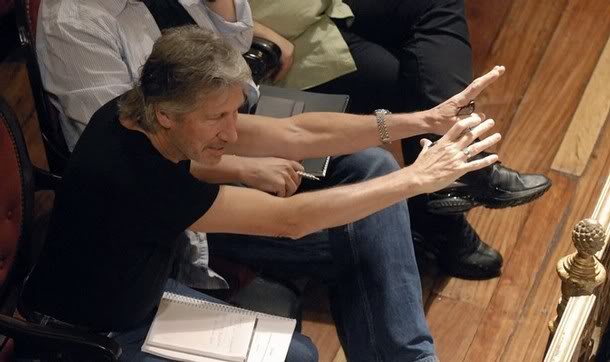
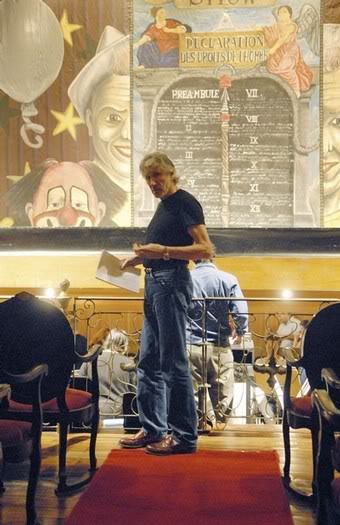
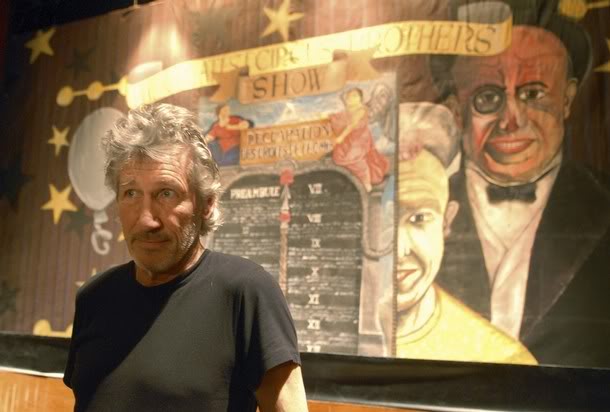
In April 2008, "Ça Ira" was performed, with the libretto in English, as part of the Festival Amazonas de Ópera in Manaus, Brazil by the Amazonas Philharmonic Orchestra and choir.





Pictures from photobucket.com/Rogely-w
2012/10/14
Pink Floyd - ATOM HEART MOTHER (Conservatoire National supérieur de musique et de danse de Paris, 2003)
"Atom Heart Mother" is a six-part suite by progressive rock band Pink Floyd, composed by all members of the band and Ron Geesin. It appeared on the Atom Heart Mother album in 1970, taking up the whole first side of the original vinyl record. It is Pink Floyd's longest uncut piece (the later "Shine On You Crazy Diamond", though longer, was split between two sides of Wish You Were Here.) Pink Floyd performed it live between 1970 and 1972, occasionally with a brass section and choir in 1970-71.
Performed by Conservatoire National supérieur de musique et de danse de Paris (CNSMDP) in March of 2003.
Performed by Conservatoire National supérieur de musique et de danse de Paris (CNSMDP) in March of 2003.
2012/10/07
"Einer gibt den Ton an" - DER SPIEGEL 21/2003

Einer gibt den Ton an
Von Dallach, Christoph
Das ehemalige Pink-Floyd-Mitglied Roger Waters über die Neuauflage des legendären Albums "The Dark Side of the Moon"
Waters, 58, einst Cheftexter der Popgruppe Pink Floyd, lebt in der südenglischen Grafschaft Hampshire.

SPIEGEL: Mr. Waters, der jetzt im 5.1-Surround-Sound digital aufgemöbelte Pink-Floyd-Klassiker "The Dark Side of the Moon" gilt als eine der erfolgreichsten britischen Platten aller Zeiten, von der noch heute, 30 Jahre nach der Entstehung, allein in den USA jede Woche rund 8000 Stück verkauft werden. Staunen Sie selbst über diesen Erfolg?
Waters: Na ja, die Platte ist wohl zu einem dieser Klassiker geworden, die von jungen Generationen immer wieder entdeckt werden. Es ist ein sehr emotionales Werk über die Fragen der menschlichen Identität, und so was verliert eben nie an Aktualität. Bob Geldof rief mich neulich an, um mir zu erzählen, wie sehr er meine Arbeit schätzt. Dabei hat er Pink Floyd lange gehasst.
SPIEGEL: Wie kommen Sie darauf?
Waters: Wir fragten mal an, ob er nicht bei der Aufführung von "The Wall" mitmachen wolle. Sein damaliger Manager informierte ihn darüber während einer Taxifahrt. Aber Geldof keifte empört los: Pink Floyd? Das ist doch der schlimmste Schrott, den ich mir nur vorstellen kann. Dummerweise war der Fahrer des Taxis zufällig mein Bruder. Der hat sich alles schweigend angehört und mir später erzählt. Wir haben uns ausgeschüttet vor Lachen.
SPIEGEL: Ihr Lieblingsthema ist die Angst. Sind Sie ein ängstlicher Typ?
Waters: Nein, aber Kafkas Sicht auf die Welt hat schon immer eine Faszination für mich gehabt. "The Wall" handelt von der Furcht, bloßgestellt zu werden, "The Dark Side of the Moon" von der Angst des Individuums, sich in Apathie zu verlieren.
SPIEGEL: Sie waren lange die treibende Kraft bei Pink Floyd, bis Sie sich vor rund zwanzig Jahren im Bösen von der Band getrennt haben. Was war geschehen?
Waters: Es kam wie bei den meisten zwischenmenschlichen Beziehungen: Man hatte sich auseinander gelebt. Ich habe viele Pink-Floyd-Songs geschrieben. Und ich erinnere mich genau, wie Rick Wright damals, als "The Dark Side of the Moon" erschien, in einem Interview sagte, wir würden uns nicht um die Texte unserer Songs scheren. Ich dachte nur: du vielleicht nicht, aber ich schon. Ein Problem war auch, dass ich immer politischer wurde und das zunehmend in unsere Musik einbringen wollte. Aber davon war Dave Gilmour überhaupt nicht begeistert. Er ist überzeugt, dass man Pop und Politik nicht verknüpfen sollte.
SPIEGEL: Das britische Musikmagazin "Mojo" nannte Sie einen "Rock'n'Roll-Despoten", wahrscheinlich, weil Sie bekannt dafür sind, dass Sie, was Ihre Ideen und deren Umsetzung angeht, keine Kompromisse machen. Funktionieren Popbands nicht demokratisch?
Waters: Einer muss immer den Ton und die Richtung vorgeben. Aber das macht die Beiträge der anderen nicht weniger wichtig. Ich war lange der Hauptautor bei Pink Floyd, aber ohne die anderen hätte die Band nicht funktioniert. Doch machen wir uns nichts vor: Letztlich wird große Kunst immer von Individuen produziert.
SPIEGEL: Pink Floyd kennen Millionen Menschen. Dass Roger Waters da lange die treibende Kraft war, ist nur Spezialisten bekannt. Wie frustrierend war die Erfahrung, als Solist ohne Pink Floyd deutlich weniger erfolgreich zu sein?
Waters: Die Erkenntnis, dass ich mit dem Abschied von der Band auch einen Großteil des gewohnten Publikums zurücklasse, war schon eine überraschende und besonders schmerzhafte Erfahrung. Aber ich habe mich mit der Zeit damit vertraut gemacht.
SPIEGEL: Sie sind einer der erfolgreichsten Popmusiker aller Zeiten, aber erkennt Sie irgendwer im Supermarkt?
Waters: Kaum. Das ist das Schöne daran, als Teil einer Band seine Anonymität zu wahren. Ich habe es auch immer vorgezogen, so unauffällig wie möglich aufzutreten. Nicht so wie Prince, der sieben Bodyguards zum Sichern in einen Laden schickt, bevor er hineingeht, und sich später beschwert, dass er immer angestarrt wird.
SPIEGEL: Was halten Sie als alter Sozialist von der Verbrüderung der Labour-Regierung mit der Bush-Administration?
Waters: Die Macht, mit der amerikanischer Materialismus die englische Lebensweise immer weiter umkrempelt, schockiert mich sehr. Ich habe sogar ein Lied darüber geschrieben, wie die traditionelle englische Bulldogge zum Pudel von Uncle Sam geworden ist. Diese ganze politische Blenderei der letzten Monate hat mich an die Platten von Madonna erinnert: viel Rauch um nichts! Umso begeisterter war ich, dass Deutschland, Frankreich und Russland standhaft geblieben sind. Diesen Wahnsinn zu verfolgen hat mich erschreckt, aber auch zu einigen neuen Songs inspiriert.
SPIEGEL: Falls Sie vorhaben, die in den USA zu veröffentlichen, könnte auch Ihnen ein Boykott drohen wie etwa den Dixie Chicks, die George W. Bush attackiert haben ...
Waters: ... in Amerika kann mich zurzeit nicht mehr viel erschrecken. So was wie Clear Channel ist wirklich bedrohlich. Die betreiben in den USA mehr als 1200 Radiostationen und sind auch auf dem Gebiet des Konzertmanagements tätig. Der Manager von Christina Aguilera hat mir erzählt, sie sei von Clear Channel aufgefordert worden, ein Konzert für sie zu spielen. Das habe sie abgelehnt. Daraufhin wurde ihr bedeutet, dass ihre nächste Single es nicht ins Programm schaffen würde, wenn sie ihre Meinung nicht ändere. Diese Art von Machtmissbrauch erschreckt mich.
SPIEGEL: Sie werden nächstes Jahr 60. Werden Sie weiterhin Zeilen wie "We don't need no education" schmettern?
Waters: Was sollte mich davon abhalten?
INTERVIEW: CHRISTOPH DALLACH
English translation (from brain-damage.co.uk)
Der Spiegel: Mr Waters, "The Dark Side of the Moon", which has now been revamped in 5.1 Surround sound, is still considered one of the most successful British records of all time. And even today, 30 years after its first release, it keeps selling some 8000 copies a week - in the US alone. Are you amazed at this success?
Roger Waters: Well, this record has probably become one of those classics that gets rediscovered again and again by younger generations. It is a very emotional piece of work about questions of human identity; those things never lose relevance. Bob Geldof called me recently to tell me how much he appreciates my work, even though he hated Pink Floyd for quite a while.
Der Spiegel: Why do you think this?
Roger Waters: We once asked him if he wanted to take part in the film of "The Wall". His manager at that time told him about it during a taxi ride. But Geldof started moaning: "Pink Floyd? That's the worst crap I can imagine!" Unfortunately, the taxi driver was my brother. He quietly listened to all of it and told me. We nearly died laughing!
Der Spiegel: Your favourite topic is angst. Are you an anxious type?
Roger Waters: No, but Kafka's view of the world has always been fascinating to me. "The Wall" is about the fear of being exposed, "The Dark Side of the Moon" about the anxiety of the individual to lose oneself in apathy.
Der Spiegel: For a long time you were the driving force behind Pink Floyd - until you parted from the band on bad terms some 20 years ago. What happened?
Roger Waters: It was just like most relationships: our lives grew apart. I wrote a lot of Pink Floyd's songs. And I very distinctly remember how, back when "The Dark Side of the Moon" was released, Rick Wright said in an interview that we didn't really care about our lyrics. I just thought, "well, maybe you don't, but I do". Another problem was that I was becoming an increasingly political person and I wanted to put some of that into our music. But Dave Gilmour wasn't at all excited about that. He is convinced that you shouldn't combine pop and politics.
Der Spiegel: British rock magazine "Mojo" once called you a "rock and roll despot", probably because you are known for not compromising your ideas and their realization. Can't pop bands work on a democratic basis?
Roger Waters: There always has to be one person setting the scene and leading the way, for the others. But that doesn't make the contribution of everybody else less important. I was the chief writer in Pink Floyd for a long time, but without the others the band wouldn't have worked. But don't let us fool ourselves: in the end, great art is always made by individuals.
Der Spiegel: Pink Floyd is a name known by millions. But the fact that Roger Waters was the driving force for a long time is only known to relatively few specialists. How frustrating was the experience of being distinctly less successful as a solo artist without Pink Floyd?
Roger Waters: The discovery that parting from the band also meant leaving behind the majority of the audience I was used to, was definately a rather surprising and hurtful one. But since then, I have made myself comfortable with it.
Der Spiegel: You are one of the most successful pop musicians of all time - but does anybody recognise you in the supermarket?
Roger Waters: Rarely. That's one of the good things about keeping one's anonymity as part of a band. I always prefered showing up as inconspicuously as possible. Not quite like Prince, who first sends seven bodyguards into a store before he enters it. Later on, he complains that he was constantly being stared at.
Der Spiegel: What do you as an old socialist think about the fraternity between the Labour government and the Bush administration?
Roger Waters: The power and force with which American materialism is turning English habits inside out is pretty shocking to me. I even wrote a song about how the traditional English bulldog has turned into Uncle Sam's poodle. All that political deceiving in the last couple of months reminded me of Madonna's records: much ado about nothing! I was more encouraged when I saw how Germany, France and Russia stood their ground. This whole craziness shocked me but also inspired some new songs.
Der Spiegel: If you are planning on releasing them in the US as well, you might be facing a boycott just like the Dixie Chicks who attacked George Bush...
Roger Waters: In the US there's hardly anything that could shock me at the moment. Things like Clear Channel are really frightening. They operate more than 1,200 radio stations in the US and are also active in corporate manegement. Christina Aguilera's manager told me she'd been called by Clear Channel and asked to play a concert for them. She refused. Consequently she was given to understand that her next single would not make it into their rotation if she didn't change her mind. This kind of misuse of power scares me.
Der Spiegel: You are turning 60 next year. Are you still going to blare out lines like "We don't need no education"?
Roger Waters: What should keep me from doing it?
Adapted from an excellent translation by Andre from the Echoes mailing list. Thanks Andre!
Links www.spiegel.de
2012/09/30
2012/09/16
Roger Waters Ça Ira - libretto
Open publication - Free publishing - More ca ira
Roger Waters - Ca Ira (There is Hope) - libretto. Music: "But the Marquis of Boulli Has a Trump Card Up His Sleeve" - Act Three, Scene 1 [2]
issuu.com
Roger Waters - Ca Ira (There is Hope) - libretto. Music: "But the Marquis of Boulli Has a Trump Card Up His Sleeve" - Act Three, Scene 1 [2]
issuu.com
Roger Waters - ÇA IRA (Poznań, 25 August 2006)
Full operatic performance - 25 August 2006 in Poznań, Poland.
Polskie napisy
2012/09/13
2012/08/26
Roger Waters: Breaking Down The Wall - Guitar.com, April 2002

Largely absent from the music scene since the early '90s, Waters took an active role last year in the assembling of Is There Anybody There: The Wall Live 1980-81, a document of the concerts Pink Floyd performed for its multi-platinum 1979 opus The Wall. More importantly, he assembled a band and has toured each of the past two summers, playing a selection of Pink Floyd favorites and material from his solo career.
The new album he's working on has not been completed yet, but these days Waters -- who has a reputation as a meticulous perfectionist and taskmaster -- is enjoying the simple act of playing music for an audience and re-creating his old songs with a band of luminaries, which includes the triple guitar arsenal of Doyle Bramhall III, onetime Pink Floyd sideman Snowy White, and Andy Fairweather-Low. His battles with his former bandmates seem to be well in the past now, and Waters comes off as fully engaged in his current endeavors.

Guitar.com: What inspired you to return to tour again?
Roger Waters: I did a show for Don Henley in '92, when I was in L.A. working on Amused to Death. It was a charity gig for his Walden Woods project, and we did it in the Universal Amphitheater, just four guys who got together and did a few songs each -- John Fogerty, Neil Young, me, and Don himself. And I did four or five songs using his band, and I just found I really, really enjoyed it, playing a few of the old songs. The audience was really, really receptive, really warm. At that point, I thought, "I want to do this again."
Guitar.com: It's interesting because the touring hasn't been tied to a particular album or other product.
Waters: I wanted to do a kind of small tour, nothing huge, just kind of drift around a few gigs in the States and put a little show together. Nothing too big, and keep it kind of reasonably relaxed and just do it. And that's what we did.
Guitar.com: Has performing the songs in that context given you any new insights?
Waters: Yes, some of them take on different connotations. I don't know if I can be specific about that, but some of the songs which might have been written in the first case about something specific now have kind of a universal connection to them. I guess a song like "Wish You Were Here" might be a good case in point; that can be about almost any absence, thought I guess even that song has pretty specific lyrics about 'exchanging walk-on parts for lead roles in cages.' But, nevertheless, it's kind of a song about loss.

Guitar.com: It's quite a band you've been working with, particularly the guitarists. How did you bring them all together?
Waters: Well, I've known Andy Fairweather-Low for a long time, and I?ve known Snowy for even longer. And I've always admired Snowy's playing. I didn't know Doyle; at one point, Patrick Leonard was going to go on the road with us, and he actually recommended Doyle Bramhall to me. And then Doyle made a demo of himself singing the choruses of "Comfortably Numb" and playing a solo over it, which he made at home and sent to me, and I thought it was pretty cool. And then we met and I liked him.
Guitar.com: You also have Jon Carin on keyboards, which is interesting because he also played with Pink Floyd on its last couple of tours. Did that present any sort of problem?
Waters: Not really. He does a specific job, and he does it particularly well. I don't have any worry about the fact that he's somebody who might be seen to have been in another camp at some point. That's not a problem. He's a big fan of the music and the songs, and he expressed that very clearly when we spoke on the telephone before we rehearsed together. I think he may have been [intimidated]; there's no question that I would have been bad-mouthed to some quite considerable extent, surely, in his presence because of the work he had done with those other guys. They would have built up a strange picture of me as this autocratic monster. I think people who have been in that environment are always surprised when they meet me and discover how warm and cuddly I am.
Guitar.com: Has some of the rancor subsided? I was impressed that in the booklet accompanying "Is There Anybody Out There," that none of you took gratuitous potshots at each other.
Waters: Yeah, well, I think there's been quite enough of that to last us all for the rest of our lives.
Guitar.com: Did you enjoy revisiting The Wall period for the live album?
Waters: Yeah, I did. The overriding memories are positive. It was an amazing thing to be part of. It was an extraordinarily ambitious project. I had a great team of people working with me. I think we made a pretty extraordinary show that was wonderful to do. It gripped the audience. The audience just sat there, open-mouthed, more or less through the whole thing, hardly able to believe what was going on in front of them and particularly at the end, when these 22-pound cardboard bricks were crashing almost into their laps. It was quite a stunning moment of rock theater, and I think it may well be that it was kind of a pinnacle of where rock theater went to.
Guitar.com: What's the status of your next album at the moment?
Waters: I've got five songs done. Four of them have got lyrics, and one of them I'm working on the lyrics at the moment. The one I'm working on seems to be developing into something that might be called "Love in Spite of Traffic," which is a strange kind of concept. I think for the whole thing I started off thinking it was going to be about "Each Small Candle," which is the one new song we played in the show, and a rap built around the chorus line, which was 'each small candle lights a corner of the dark.' The idea implicit is that we each have within us a flickering flame that's capable of lighting a little bit of darkness -- that remains to be lit in the more general sense of the way human beings organize themselves, and that we're all as important as one another and we all have a personal responsibility to maybe make one significant or beautiful mark on the big painting. I have a very strong sense that we're all in this together, somehow.
Guitar.com: Are you anticipating another thematic project, then?
Waters: I think so, yeah. I've always been obsessed with the idea of senseless death and destruction and pain and poverty and things that are actually avoidable and may well be becoming more avoidable as we learn to communicate with each other more directly -- even, dare I say, the possibilities that are opened up by the Internet and information technology. I guess you may say that I'm a dreamer, but I'm not the only one.
From guitar.com
2012/08/13
Roger Waters - Rock In Rio (Portugal, Lisbon, 2006) - Full
Roger Waters - Tour 2006
2 June Portugal Lisbon - Rock in Rio Festival
Official attendance 70,000
2012/07/26
Roger Waters - Dark Side Of The Moon Tour - 2007 - FULL CONCERT
Roger Waters - Dark Side Of The Moon Tour - Live in Argentina 2007
2012/04/19
Roger Waters interview - The Word, 13 April 2008

Is this a new Roger Waters, forgiving and gently philosophical about his former Pink Floyd partners? Or has a fresh consignment of grief arrived to get his goat? "You can't suck me down that whole pit of despair again. I can't go there," he warns Mark Ellen.
Roger Waters: It's an absolutely stunning morning in Manhattan, the sunlight streaming into an apartment on Lexington Avenue, the current home of Roger Waters. These days you can't help but feel there's also a gentle wind at his back, and that the road is rising to meet him. His two current projects are firing on all cylinders.
The first is the restaging of his opera Ça Ira in Brazil in April, in the same magnificent theatre that appears in Fitzcarraldo. These three shows precede the upcoming second swing of his performance of Dark Side Of The Moon, a massive success in 2007 and returning to the United Kingdom in May.
RW: And, fairly obviously, there's a third project too, blossoming with much the same vigour as the others, an emerging facial thatch that makes him look as though he might have just returned to his new American base, not in a first-class window seat but at the helm of a papyrus raft.
THE WORD last talked to him just after Live 8, his conversation still fired by Pink Floyd's brief reunion and careful to leave the door ajar for David Gilmour - for 20 troubled years the group's director - to reactivate the show-stealing foursome for another world campaign. Some things never change, so Waters went out and did it himself.
RW: Two-and-a-half years later, he's softly philosophical but still brimful of vim and vigour - Hillary-hating, Radiohead-resistant, nostalgic about his artistic and personal life at the time of the record that revised their fortunes, and comically resigned to the lumbering, broken marriage of the group that made his name.
A member of Led Zeppelin once told me that one of the things that keeps him working is the fear of having to play golf with Alice Cooper, of that awful cliched vision of rock star retirement. What motivates you?
RW: Well certainly not the fear of playing golf with Alice Cooper! Though Alice actually started playing golf very seriously about 40 years ago, and he plays every single day, so he's almost certainly frightfully good. But no, the last few years have been a huge revelation, to discover that there's a young audience out there who are devoted to your work - I had no idea really - and I've discovered huge changes in my personality. I no longer feel even faintly constrained to spit at anyone, to feel angry. So I get a huge kind of emotional payback.
When I interviewed you just after Live 8, you talked about these "huge holes in your psychology" that needed to be filled by large crowds of people appreciating your music.
RW: Yes, but I'm not sure you even have to have huge holes in your psychology, and in recent years I've grasped that. And I love it now. How much longer I'll go on doing it I don't know, but I do work every day - and work and sex even come before sport on the Pleas-o-Meter. Mind you, [Arsenal] beating AC Milan two-nil last night was pretty spectacular. If only Chelsea had lost...
If only. Do you keep an eye on the game partly out of homesickness?
RW: Well, as you know, the coverage of English Premier League, and even the Championship, is actually better over here. You actually get to see more matches than in England. And I've been an Arsenal fan all my life. I lived there from 1968 to 1975, and when I wasn't on the road I went to every home game. Stood under the clock, before they built the stands. I can name the whole squad now (he does so). I can still remember everyone going out into the street in Islington at the end of the Cup in '71 [Arsenal beat Liverpool in extra time], wandering about, slightly dazed, just remembering the pleasure of it. Which puts me in mind of listening to the radio inside and then going back out into Rock Road in Cambridge back in 1956 when Jim Laker took ten Australian wickets. Another of those moments that never ceases to be magic. They never evaporate.
If you don't feel competitive about touring and recording, I can't imagine there's much point in carrying on. It'd just be a hobby. Don't you have to want to win - and badly?
RW: I would absolutely own up to this. I confess that when I get those emails from my PR that tell me I've come third in some poll somewhere I have to own up to a little glow of pride. There may be one or two exceptions but, by and large, most musicians are pretty insecure. A bit less so than we used to be but, nevertheless, insecure. And we crave that kind of attention you get by standing up in front of thousands of people. And if you're interested in music, you don't have to go for that aspect of it. You don't have to flog round the world and make huge fortunes and play huge places. You can just do it in your bedroom.
Correct any misunderstandings about you. Write you own Wikipedia entry.
RW: Oh, you can't suck me down that whole pit of despair. I can't go there. I'm sure there are lots but I'd have to leave that to others.
The track Echoes [from Meddle in 1971] came up on my iPod the other day and I couldn't believe how contemporary it sounded - the lyric, the vocal, the "inner-voyaging" sound effects. Why does this music still survive and so much else released at the time sound dated? Weirdly, it lasted exactly the same length of time as my tube journey from Hammersmith to King's Cross - 23 and a half minutes.
RW: God, that takes me back. I used to travel on the tube from Goldhawk Road to Paddington a lot, back in the late '60s when I lived in Shepherd's Bush. And there was this terrific piece of art I passed every day, graffitied on this very long kind of concrete wall. So as you pulled out of Goldhawk Road tube station and headed for the darkness, while you're still up in the light, somebody had written, SAME THING DAY AFTER DAY. It was about 30 yards long. The whole thing read something like, HAVE A CUP OF COFFEE, GO DOWN THE STATION, GET ON THE TRAIN, GO TO WORK, COME HOME, WATCH TV, GO TO BED - SAME THING DAY AFTER DAY. And it was repeated again and again, going faster and faster as you accelerated into the blackness of the tunnel. And I was thinking, "Who did that?" This was 1968 or whatever. In fact there was an advert in the tube around the same time - and I don't think I've ever shared this before - not sure what it was advertising, a bank or building society or something, and it said GET A GOOD JOB WITH MORE PAY - though there were no vowels, only consonants. And I remember connecting those two images from the underground - one was art and one was commerce - and they sort of married in my mind. And that's where the lyrics for the song Money came from.
But to answer your question, I really don't know why its popularity has sustained. Dark Side is just very accomplished sonically and musically; the work we were all doing - particularly Rick - in terms of chord structures. Rick described that rather eloquently in the documentary, all these jazz influences that start with Miles Davis's Kind Of Blue. And also obviously Dave's playing and singing, which is just beyond good. So all those things really.
It was complicated music to have reached so many people - the idea of the life cycle from birth to death in the songs themselves. The only records that sold more in America were a lot more superficial - Thriller, The Eagles' Greatest Hits, Saturday Night Fever, The Bodyguard soundtrack...
RW: Funnily enough, The Wall has sold a lot more than Dark Side in America now. I think it goes Thriller, The Eagles, The Wall, then Dark Side. But it always sounded like a very popular record. I remember when we finished it off thinking it would be a huge hit. I honestly don't know why. I just did. It had a lot of class but it was also deeply appealing. And of course Money was seriously embraced by the AM radio, the cash register thing struck a chord. And radio was a big factor then. Which is why they were always bribing them so heavily in those days with cocaine and cash! But I like to think there's a political dimension of honesty about the whole record that gives it a flavour of truth. That's also a contributing factor to its longevity. People understand immediately when they hear it that there's nothing contrived about it.
Did you imagine any of the political issues it raised would have changed in 35 years?
RW: No, probably not. Though to some small extent they have changed. They go through cycles. That sort of slavish attention to Reaganism, to Thatcherism - although it was actually pre-Thatcher and pre-Reagan. But I stare out of my window every morning down Lexington Avenue and you can't live in New York without being very aware that money is still the primary god. But there is this sense, particularly in this election year, that the great unwashed may, finally, just be beginning to twig it a little bit, to just begin to understand that they're being fucked over by the 3 per cent of the population who own 98 per cent of the world and dangle that apple of billionairism in front of them. And that
they may - may, particularly in the light of the debacle in Iraq - they may just be on the verge of beginning to twig that the people who had their heads busted for starting the unions in the '20s and '30s were maybe on to something. They may start to vote with their mortgages, with the disaster of their economic lives, in a more realistic way. I mean how anyone with an income of 50,000 dollars a year can vote Republican is absolutely beyond my understanding.
But isn't the problem partly the whole economic structure of virtually any political election anywhere in the world, but particularly in America? To have the table stake to even be able to play, to be able to launch a campaign that will get any publicity, you need enormous funding. And, if elected, you're permanently in a political compromise with the organisations that gave you the money to get elected in the first place?
RW: Yes, but that's not true of Obama. That's the most elevating and exciting thing about the race for the Democratic position: Obama's money is coming from the people! It's coming from small contributions from people with access to computers. And that is very exciting. I mean, I am a huge fan of Barack Obama and I was so disappointed the other night when the ghastly Hillary got Texas and kept the whole thing going. Please God, let's not have this woman! Not because she's a woman, just that she's old guard. And we've had enough of the Clintons and Bushes. Hillary will want to make her mark and show that she can be just as good as a male president and she will fucking invade Iran. Trust me. She voted to declare the Iranian Republican Guard a terrorist organization!
After the Vote For Change tour in 2004 - REM, Springsteen, etc - you wonder, honestly, whether a rock star's view can ever persuade anybody.
RW: I don't agree. And if I thought there wouldn't be a huge reaction, I would buy a whole page in The New York Times and fly Obama's flag and lend support to his cause. But I would be terribly afraid that they'd go, "This is that pinko shitbag whose, you know, attacking our President in time of war" or whatever.
And a lot of Republicans would presumably stop buying your records.
RW: I don't give a shit about that. I've been going all over this country doing this show and one of the songs I do, Leaving Beirut, is pretty strident in its political message. So I'm standing there giving them both fingers and when I sing lines like, "Oh George! Oh George! That Texas education must have fucked you up when you were very small" - which give me a great deal of pleasure to sing - most of the people in the audience respond very positively. But then we're living in an eye-blink. It's very easy to lose sight of the fact that social and political changes happen over very large timescales. It's only now that the globe is beginning to grapple with some of the thinking dating back to the 18th century - the American Declaration of Independence in 1776 and Le Déclaration des Droits de L'Hommes in Paris in 1789. The idea that human beings had rights. Because before that - and this is only 200 years ago, which is really sort of nothing, it's two lifetimes if you think about it; these days people live to 100 - before that, by and large, the political systems have been feudal. OK, we English had a little bit of a revolution about 150 years before but, by and large, people believed in the divine right of kings - that the king was appointed by God and that he was connected to God - a bit like the Catholics still believe that you can only find God through the divine ruler. So this idea was only really dismantled in the late 1700s. And the fact that it is still being dismantled and the idea that ordinary people have rights has come even as far as it has in the last 200 years shows that these changes are happening and will continue to happen. But it's important to keep a sense of perspective.
Do you think the attitude to rock music is different in America? I have this theory that American media embrace it because they've got less cultural history - F Scott Fitzgerald is up there with Walt Disney and Steven Spielberg and Madonna; they're all part of popular culture. But there are still sections of the British media that find it hard to take rock music seriously in a cultural history that includes, you know, Chaucer, Shakespeare, Hogarth and Dickens.
RW: I think that's absolutely true but it's also true that American society and culture is much more positive and more giving generally. There's a lot less criticism. I found in the UK there's a sort of mealy-mouthed reluctance to pat anyone on the back or whatever. It seems that the first national reaction to any measure of success is a stab in the back rather than a pat on the back.
But that's just the great "earthing" capacity of the British cynical filter! Americans tend to envy success but the British fear that it'll make them lose touch with someone they feel a connection with.
RW: Is that what you think it is? That you should be "poo-er" forever? But they sort of hate you for being good at anything - unless it's kicking a pig's bladder about, anything else you get attacked for. But I've been over here for a few years and people go (Yorkshire accent, bizarrely) "Well done, son! By gum, you did well!" You don't get any of those amazing blistering vitriolic attacks on what people call progressive rock or whatever - "Who do they think they are? Overblown self-indulgent crap..."
Can you hear the influence of the Floyd in all these clever British rock bands - Wire, Talk Talk, Blur, Shack, Coldplay, Radiohead?
RW: Can I? No I can't. That bit of my brain has no power, I think. It doesn't attach. I don't really listen to Radiohead. I'm sure it's very good and everything - I'm absolutely sure it is because everybody says it is - but I listened to the albums and they just didn't move me in the way, say, John Prine does. His is just extra-ordinarily eloquent music - and he lives on that plain with Neil [Young] and Lennon. I don't have satellite radio in my car yet - which is stupid and you can get whatever you want and as much of it as you want - but if I'm flipping through channels in the car I'll stop for old stalwarts like Neil and John, but usually you can be certain that the thing you've stopped for is going to finish in three minutes and the thing that comes after it will be unlistenable. So you sort of don't bother. That's why I never watched MTV - because of the programming. Nothing ever seemed to go on long enough to be worth watching. And even if that particular video was interesting, you'd get something directly afterwards that inevitably wasn't.
That's interesting. So, for you, brevity automatically implies superficiality.
RW: Yeah, and that's one of the tragedies of the death of FM radio as it was in the late '60s. People played whole albums, or Sad-Eyed Lady Of The Lowlands or whatever, and that made it much more interesting. Then the businesses got hold of it and decided they had to respond to the bottom line and the audience figures were the only thing that mattered, and that sort of destroyed it. Which in some ways could be seen as a microcosm of - or at least a warning sign to - society in the United States at the moment. If you make that the only thing that matters, you destroy many potential avenues for society to change.
Have you given up hope of finding a replacement for Neil Young or John Lennon?
RW: Well, no, I mean… no, I haven't given up hope at all. If one comes along I'll notice it. John Prine is one but he's almost a contemporary. Can you think of another?
I honestly think you should give Radiohead another try. There's not a lot of brevity in your Radiohead album - some songs are in four movements - but it's got all the good parts of what we used to call progressive rock and none of the bad bits. It's not complexity for its own sake, just the reverse: everything is designed to support the lyric and the soul of the song. And they seem very influenced by Pink Floyd. I don't mean to twist your arm here but...
RW: No, I'm very happy to have my arm twisted. Seriously! Maybe I'll give them another go. It would be very nice to discover something else to listen to.
If you could go back to your 29-year-old self, is there anything you'd rewrite on Dark Side Of The Moon?
RW: No, I don't think there is. But I remember when I wrote Time - yes, I was 29 at the time - it was all true. It's not like I made the song up or anything. What happened was I suddenly had this revelation. I was 29 before I suddenly twigged that I wasn't in a rehearsal. That I wasn't preparing for anything. That actually my real life had been happening for some time without me noticing it. It was that weird feeling, you know, that I'll soon be ready and then life will begin. But I loved the way we worked back then. Dark Side's forerunner was a thing we did at the Royal Festival Hall [in 1969] called The Man And The Journey, which was this strange rambling sort of piece that was put together but it had some of the elements that later showed up on Dark Side Of The Moon. I have this memory of arriving with this song Eclipse one afternoon - in Cardiff, I think - and saying, "Look I've nearly got an ending for this." And we may have even done it that night in the show. It was that free and easy. That night I seem to remember we'd suspended a giant elbow at the back of the stage. We went though this long period where "giving someone the elbow" would be very important! Can't remember why.
I saw an old pal from college the other day and told her I was going to interview you and she got in a right old pickle. She said, "For God's sake, the Pink Floyd - they ruined my sex life! You'd be sitting around with a few blokes, one of whom you quite fancied, and then one of them would put on three Floyd albums on one of those Selecters - you know, all stacked up, Ummagumma, Meddle, Dark Side Of The Moon - and then you knew nothing was going to happen for at least 90 minutes, after which everyone would probably be asleep."
RW: Well, yes! (laughs) Women did tend to have a slightly different reaction to us than men! But I'm happy to say that women in general - and young women in particular - are attaching themselves to this stuff a lot more than they used to. There's definitely a bit more knicker-waving now, which can be nothing but a good thing. My audience is now packed with young women, whereas it always used to be young men in greatcoats. You look at some of that old footage on YouTube and you can see that the audience used to sit there, actually sit, very still and quiet, concentrating and listening very carefully.
Syd Barrett died in 2006. How accurate do you think the perception of him was in any obituaries you read?
RW: I think it's a great shame really that people swallowed the notion that he suddenly took a lot of acid and it destroyed him. This is absolute bollocks. There was something much more fundamental about Syd's schizophrenia than taking too much acid. But I felt very sad. I still feel regret that we weren't able to enjoy his company for all those years when he disappeared into the illness. But I think of him often. No least because I've been editing some of my shows recently and we've been doing Shine. We now do this with a 60 by 30 LED screen with footage of Syd. I went to the opening of Rock And Roll in New York, having been in London and met Tom Stoppard and become friends with him. Have you seen this play? It's really, really good. Particularly if you're me as it's about three things I'm particularly interested in - Communism, Cambridge and Syd.
Will the Live 8 lineup of Pink Floyd ever perform together again?
RW: (Chuckles)
I'm contractually obliged to ask you. WORD readers would murder me if I didn't - and rightly so.
RW: It's always the same answer. I always chuckle.
So the answer is "possibly"?
RW: The answer is... not up to me. The answer is: I'd be very happy to do it but it's sort of up to Dave, I guess. But I don't think he wants to do it, so I don't think it'll happen. And that's absolutely fair enough. It's not going to change my life. But I did love Live 8. I thought it was really, really special. If that's the only thing we ever get to do again to underline the collaboration then I'm very glad there was at least one moment we could do it. But I thought it sounded great. The feeling was... it was so... it was so intense. But I'm not sure that we all felt that. In fact I'm quite sure that we didn't all feel that. But most of us did.
How are relations between you and Dave Gilmour - cordial?
RW: Well we never speak to each other. But we don't speak to each other in a very cordial way! I feel no enmity at all.
Tell us something about the Pink Floyd we don't already know.
RW: Read Nick's book. It's the gospel truth! Of course it isn't, but no, Nick and I have a more than
cordial relationship. We met up on a beach in Mustique and we've become great friends again. So the book [Inside Out: A Personal History Of Pink Floyd] is a running joke. He said that when he sent me a draft - when we were still faintly estranged - that when it came back it had a blue pencil through almost everything.
Did he take any notice?
RW: Not much. But you know, so what. The great thing about all of that is that we now know - because of all the research that's done in neurologly - we now know that we can't actually remember very much, so a lot of the arguments about who did or said what are all actually irrelevent because, however much we may think we remember, we now know the brain will invent memories that suit the ego of the person who owns the brain. It's not a reliable instrument, even faintly. So, for instance, if Nick thinks he helped me make the cash register loop for Money and I seem to remember doing it on my own in a shed in the bottom of my garden, then there is absolutely no way of knowing whether he did or he didn't. It's not like somebody's lying. The person who has the false memory will believe it absolutely and so… Oh, but who gives a fuck really? (laughs) I got this brilliant email passed through to my office the other day - "Dear Mr Waters, I gather you may be casting a feature film about the recording of Another Brick In The Wall and I'd like to put myself forward to play the part of Nick Mason, who I believe to be the central character in the Pink Floyd story. I think I'm absolutely meant to play the part, with my extraordinary character acting skills and ingenious use of makeup…" and it went on like this for some while. And there were some JPEGs attached. I open one up and it's Netty, Nick's wife, dressed up in one of his old hats with a scarf round it and a false moustache. I know! (laughs) It was really, really good.
From: wordmagazine.co.uk
Subscribe to:
Posts (Atom)